Restaurant
Anne
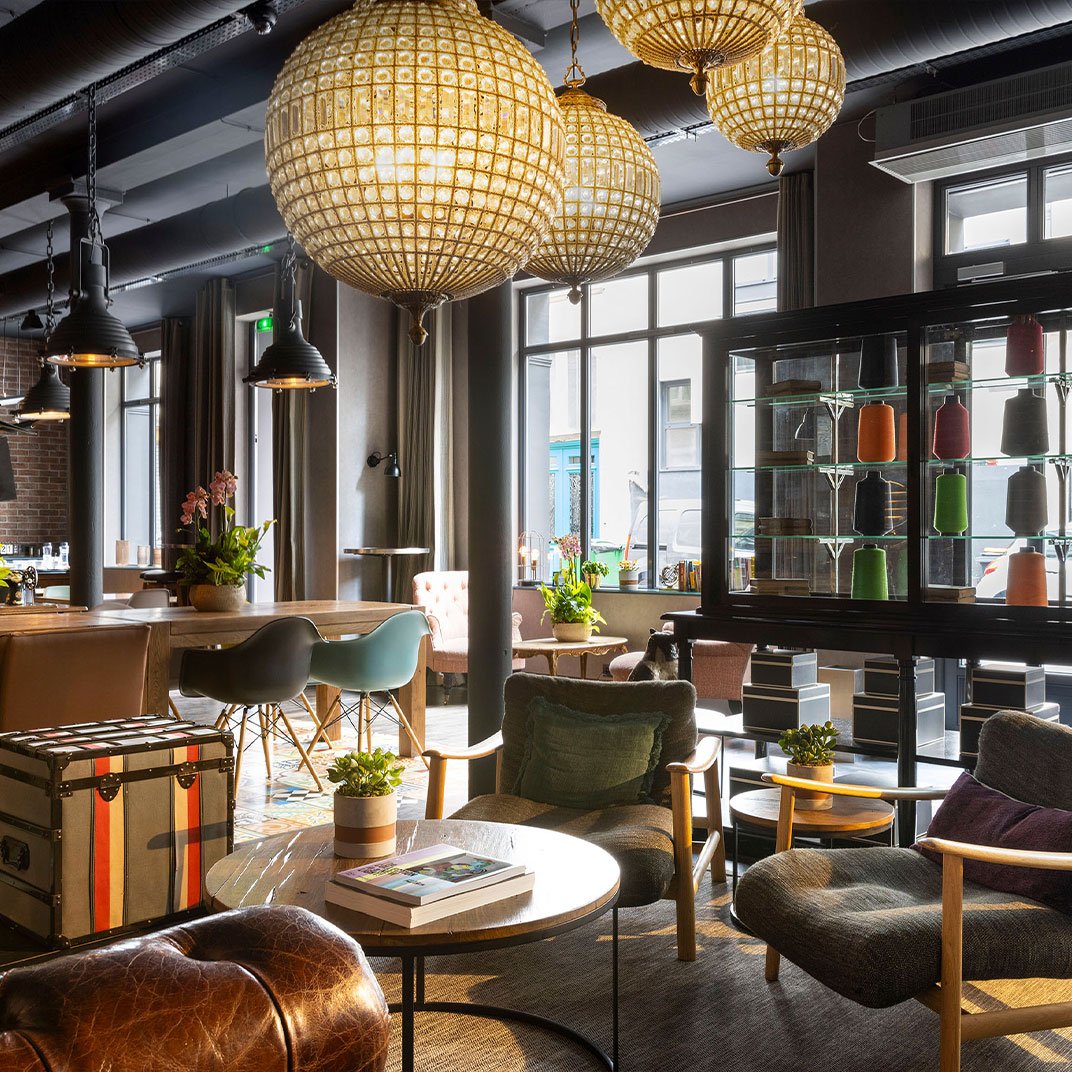
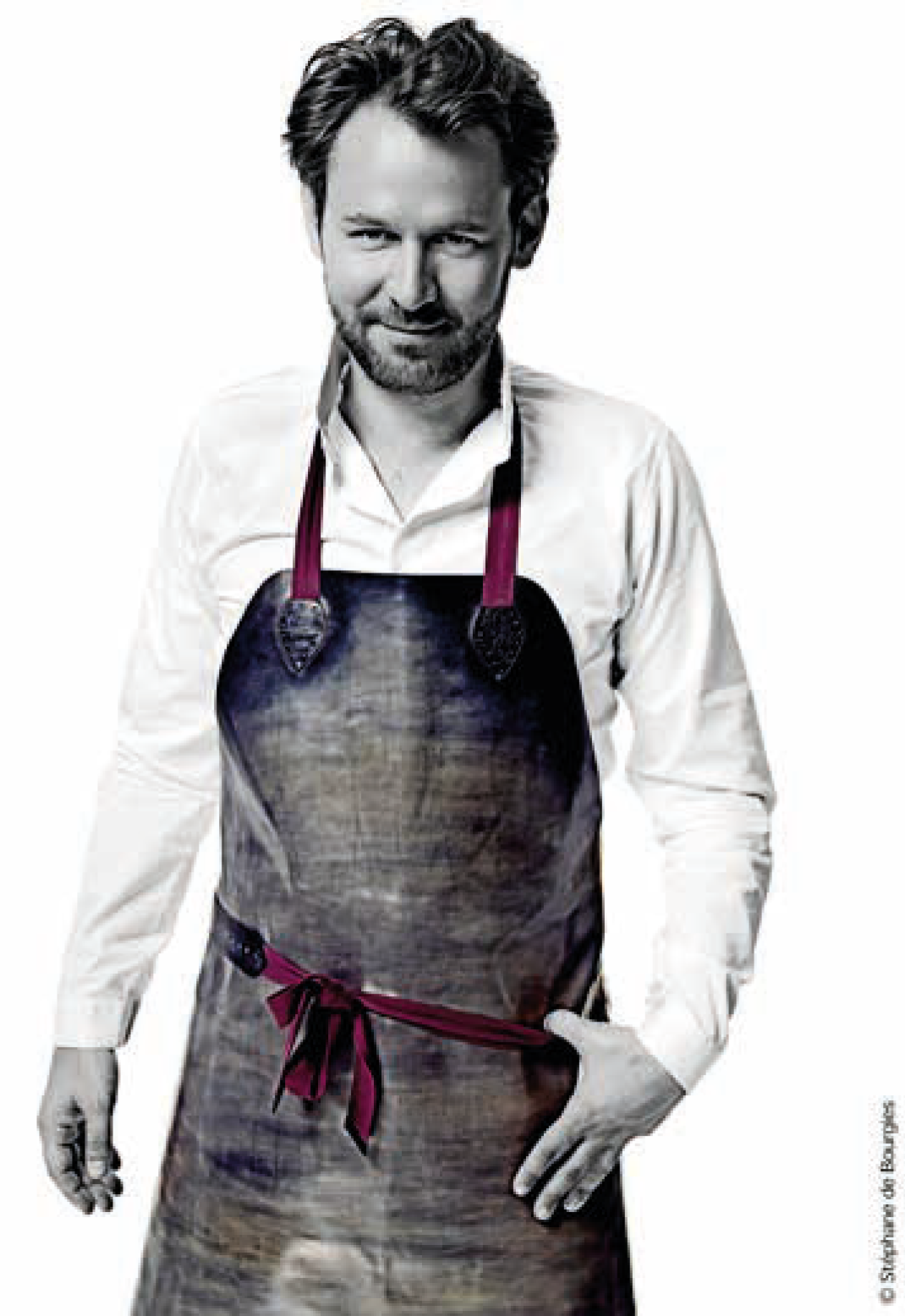
Housed within the Pavillon de la Reine on Place des Vosges, Anne operates at the top of the Marais dining tier. Chef Mathieu Pacaud reinterprets classic French technique with high-quality seasonal ingredients, earning Michelin recognition and a Google rating of 4.8 from 429 reviews. The setting spans a library lounge and a courtyard garden, making it one of the most architecturally distinctive addresses in the third arrondissement.
- 1 Michelin Star
At a glance
- Cuisine
- Modern French Fine Dining
- Price
- $$$$
- Per person
- $200
- Hours
- Mon: Closed; Tue: 12:30–2 PM, 7–9:30 PM; Wed: 12:30–2 PM, 7–9:30 PM; Thu: 12:30–2 PM, 7–9:30 PM; Fri: 12:30–2 PM, 7–9:30 PM; Sat: 12:30–2 PM, 7–9:30 PM; Sun: Closed
- Neighborhood
- Le Marais
- Rating
- 4.8 (504)
<h2>A Seventeenth-Century Address in the Marais</h2><p>Place des Vosges does not need to announce itself. The oldest planned square in Paris, its arcaded facades and symmetrical geometry have defined the northern Marais for four centuries, and the restaurants that operate within its footprint occupy one of the most architecturally charged dining contexts in France. Anne, housed inside the Pavillon de la Reine on the north side of the square, sits within a building named after Anne of Austria, Queen of France and wife of Louis XIII, whose residence it once was. Approaching through the entrance courtyard, the transition from the public square to the private garden is unhurried and deliberate — the kind of arrival sequence that shapes a meal before the first course arrives.</p><p>That architectural setting is not incidental to the food. The physical separation from the street, the proportions of the rooms, the option of dining beside the verdant courtyard garden in warmer months — these are conditions that the kitchen must meet rather than overshadow. At the €€€€ price tier, which places Anne in the same bracket as Alléno Paris au Pavillon Ledoyen, Kei, L'Ambroisie, Le Cinq at the Four Seasons George V, and Pierre Gagnaire, the expectation is that every element of the experience performs at the same level.</p><h2>Classic French Technique Under a Modern Register</h2><p>Within Paris's top-tier modern cuisine addresses, the range of approaches is wider than it first appears. Some houses in the €€€€ bracket pursue creative rupture, others work within a classical grammar reframed through contemporary sourcing and technique. Anne, under the direction of Mathieu Pacaud, sits in the second camp. The Michelin descriptor for the restaurant notes that Pacaud reinterprets classic dishes with skill, relying on top-quality ingredients as the primary vehicle of flavour rather than conceptual complexity for its own sake. That orientation connects it more closely to French restaurants prioritising ingredient integrity over elaborate plate architecture.</p><p>This is a relevant distinction when considering where Anne sits within the Paris fine dining market. The Marais itself has shifted considerably over the past decade , more chef-led neighbourhood bistros, more natural wine bars, more format experimentation , which makes a classically grounded high-end address in the third arrondissement something of a counterpoint to the area's general direction of travel. The library lounge option inside adds further nuance: a smaller, more intimate format within the same kitchen, suited to a different pace of service than the main dining room.</p><h2>Ingredient Sourcing and the Sustainability Frame</h2><p>Paris's most credible fine dining addresses have, over the past several years, shifted from treating ingredient sourcing as a background assumption to making it a front-of-house conversation. The broader French culinary tradition has long maintained close ties between starred kitchens and specific producers, but the framing has changed: what was once described in terms of provenance and prestige is now more often articulated through environmental responsibility, reduced waste, and shorter supply chains.</p><p>At Anne, the Michelin assessment specifically flags top-quality ingredients that are full of flavour as central to the kitchen's approach. Within the sustainability frame, this signals that sourcing decisions are primary rather than supplementary , that the starting point of each dish is the ingredient itself, which in turn tends to direct kitchens toward seasonal produce, lower-intervention preparation, and relationships with producers whose methods align with quality outcomes. This is a different model from kitchens that source globally for novelty or prestige, and it is increasingly the model that serious Parisian fine dining has converged around.</p><p>The courtyard garden setting reinforces this orientation in a less direct way. Outdoor dining in a walled garden in central Paris is a seasonal privilege, and its availability during fine weather ties the experience to a specific moment in the calendar. That seasonality is not a marketing note; it is a structural feature of how the restaurant operates and, by extension, how its kitchen thinks about what it serves. Reservations for the courtyard months , broadly late spring through early autumn , are correspondingly more sought after, and booking ahead for those periods is advisable.</p><h2>Booking, Format, and Practical Details</h2><p>Anne operates Tuesday through Saturday for both lunch (12:30 PM to 2:00 PM) and dinner (7:00 PM to 9:30 PM), with a Sunday lunch service also available. The restaurant is closed Monday and Tuesday. Given the Michelin recognition, the location within one of Paris's most visited squares, and a Google rating of 4.8 from 429 reviews, demand is steady. Tables for the courtyard garden specifically, or for Saturday evening, should be secured well in advance. The address , 28 Place des Vosges, 75003 , is directly on the square, accessible by Metro from the Saint-Paul stop on Line 1 or Chemin Vert on Line 8.</p><p>The price tier (€€€€) places a meal at Anne at the upper end of the Paris dining range. Lunch service offers an entry point into the kitchen at lower spend than dinner, which is consistent with how many of Paris's comparable addresses structure their menus. For those planning a broader dining itinerary in Paris, our <a href="https://www.enprimeurclub.com/restaurants/paris">full Paris restaurants guide</a> covers the range of price tiers and cuisines across the city's arrondissements.</p><h2>Where Anne Sits in a Wider Dining Network</h2><p>Mathieu Pacaud's presence at Anne is worth contextualising through the wider tradition of French fine dining families and houses rather than as an individual biographical note. The concentration of multi-generational culinary lineages in French fine dining is a structural feature of the industry: kitchens like <a href="https://www.enprimeurclub.com/restaurants/auberge-de-lill-illhaeusern-restaurant">Auberge de l'Ill in Illhaeusern</a>, <a href="https://www.enprimeurclub.com/restaurants/troisgros-le-bois-sans-feuilles-ouches-restaurant">Troisgros in Ouches</a>, and <a href="https://www.enprimeurclub.com/restaurants/paul-bocuse-lauberge-du-pont-de-collonges-collonges-au-mont-dor-restaurant">Paul Bocuse in Collonges-au-Mont-d'Or</a> have all maintained their identities across generations. Anne participates in that tradition without being reducible to it , the kitchen has its own register, its own setting, and its own position within a neighbourhood that does not otherwise skew toward this type of formal dining.</p><p>For comparison outside France, the approach to ingredient-led modern cuisine at this price point appears in venues like <a href="https://www.enprimeurclub.com/restaurants/mirazur-menton-restaurant">Mirazur in Menton</a>, which built its reputation on garden-to-table sourcing, and internationally in kitchens such as <a href="https://www.enprimeurclub.com/restaurants/frantzen-stockholm-restaurant">Frantzén in Stockholm</a>. Closer to home in the French Alps, <a href="https://www.enprimeurclub.com/restaurants/flocons-de-sel-megeve-restaurant">Flocons de Sel in Megève</a> represents a similarly refined regional sourcing philosophy, while <a href="https://www.enprimeurclub.com/restaurants/bras-laguiole-restaurant">Bras in Laguiole</a> has made ingredient provenance the explicit centre of its culinary identity for decades.</p><p>Within Paris itself, the restaurants working in adjacent territory include <a href="https://www.enprimeurclub.com/restaurants/anona-paris-restaurant">Anona</a>, which has built a reputation around seasonal sourcing, <a href="https://www.enprimeurclub.com/restaurants/accents-table-bourse-paris-restaurant">Accents Table Bourse</a>, and <a href="https://www.enprimeurclub.com/restaurants/amalia-paris-restaurant">Amâlia</a>. For a broader point of comparison at the hotel restaurant end of the spectrum, <a href="https://www.enprimeurclub.com/restaurants/114-faubourg-paris-restaurant">114, Faubourg</a> occupies a similar position in terms of formal setting and price point, and the <a href="https://www.enprimeurclub.com/restaurants/auberge-de-montfleury-paris-restaurant">Auberge de Montfleury</a> offers a different register of classic French hospitality. Those planning a complete Paris visit will also find the <a href="https://www.enprimeurclub.com/hotels/paris">full Paris hotels guide</a>, <a href="https://www.enprimeurclub.com/bars/paris">bars guide</a>, <a href="https://www.enprimeurclub.com/wineries/paris">wineries guide</a>, and <a href="https://www.enprimeurclub.com/experiences/paris">experiences guide</a> useful for building out the full itinerary.</p><h2>FAQ</h2><dl><dt><strong>What is the leading thing to order at Anne?</strong></dt><dd>The Michelin assessment of Anne centres on Mathieu Pacaud's reinterpretation of classic French dishes using high-quality seasonal ingredients. Given that framing, the kitchen's strengths lie in produce-driven preparations rather than conceptual showpieces. The restaurant holds a Michelin <em>Remarkable</em> designation, which signals consistent execution at the leading of its category. For the most complete version of the menu, an evening service table in the main dining room or, in season, the courtyard garden is the format to target; the library lounge offers a more contained experience suited to those preferring a smaller, more private setting. Specific dish recommendations are not published here without a verified current menu source, but the editorial direction of the kitchen points toward classical French technique applied to seasonal produce sourced for flavour above all.</dd></dl>
Know before you go
- Dress code
- smart_casual
- Reservations
- essential
- Payment
- credit_card
- Outdoor seating
- Yes
- Children
- Welcomed
Frequently asked
What time does Anne open and close?
Hours at Anne: Monday closed Tuesday closed Wednesday 12:30 PM-2 PM 7 PM-9:30 PM Thursday 12:30 PM-2 PM 7 PM-9:30 PM Friday 12:30 PM-2 PM 7 PM-9:30 PM Saturday 12:30 PM-2 PM 7 PM-9:30 PM Sunday 12:30 PM-2 PM.
Has Anne won any awards?
Anne has received recognition including: Category: Remarkable; The Pavillon de la Reine, a magnificent residence in Place des Vosges, is named after Anne of Austria, Queen of France and wife of Louis XIII, who once lived here. In the restaurant, overseen by Mathieu Pacaud, the che….
What's the best thing to order at Anne?
Anne does not publish a fixed à la carte menu in the standard sense; the kitchen, overseen by Mathieu Pacaud, works with top-quality seasonal ingredients reinterpreted through a classic French framework. Michelin's inspectors specifically noted the skill applied to ingredient selection and flavour, which points toward produce-driven courses as the kitchen's clearest strength. Given the price range (€€€€) and the format, a set menu or chef's selection is the format most likely to reflect what Pacaud's team is doing at its best on any given service.
How would you describe the cuisine at Anne?
Anne is categorized in our database as Modern Cuisine.
What price level is Anne?
Pricing at Anne is listed as €€€€.
Where is Anne located?
Anne is located at 28 Pl. des Vosges, 75003 Paris, France, Paris.
Address
28 Pl. des Vosges, 75003 Paris, France
Le Marais
How it compares
- Cuisine
- Modern Cuisine
- Price
- €€€€
- Awards
- Category: Remarkable; The Pavillon de la Reine, a magnificent residence in Place des Vosges, is named after Anne of Austria, Queen of France and wife of Louis XIII, who once lived here. In the restaurant, overseen by Mathieu Pacaud, the chef reinterprets classic dishes with skill and real talent, using top-quality ingredients which are full of flavour. An excellent dining experience awaits, whether you choose the intimate and romantic setting of the library lounge or, in fine weather, the lovely verdant courtyard garden.; The Pavillon de la Reine, a magnificent residence in Place des Vosges, is named after Anne of Austria, Queen of France and wife of Louis XIII, who once lived here. In the restaurant, overseen by Mathieu Pacaud, the chef reinterprets classic dishes with skill and real talent, using top-quality ingredients which are full of flavour. An excellent dining experience awaits, whether you choose the intimate and romantic setting of the library lounge or, in fine weather, the lovely verdant courtyard garden.
- Notes
- This venue
Alléno Paris au Pavillon Ledoyen
- Cuisine
- Creative
- Price
- €€€€
- Awards
- Michelin 3 Star, World's 50 Best
- Notes
- Creative, €€€€
- Cuisine
- Contemporary French, Modern Cuisine
- Price
- €€€€
- Awards
- Michelin 3 Star, World's 50 Best
- Notes
- Contemporary French, Modern Cuisine, €€€€
- Cuisine
- French, Classic Cuisine
- Price
- €€€€
- Awards
- Michelin 3 Star, World's 50 Best
- Notes
- French, Classic Cuisine, €€€€
Le Cinq - Four Seasons Hôtel George V
- Cuisine
- French, Modern Cuisine
- Price
- €€€€
- Awards
- Michelin 3 Star, World's 50 Best
- Notes
- French, Modern Cuisine, €€€€
- Cuisine
- Contemporary French
- Price
- €€€€
- Awards
- Michelin 3 Star, World's 50 Best
- Notes
- Contemporary French, €€€€
In residence
Similar places
Vegetable-Focused French Fine Dining
Arpège
Paris, France
★★★ · 50 Best
Contemporary French Terroir
La Grenouillère
Paris, France
★★ · 50 Best
Avant-Garde French Fine Dining
Pierre Gagnaire
Paris, France
★★★ · 50 Best
Classic and Modern French Fine Dining
Le Taillevent
Paris, France
★★ · 50 Best
Classic French Fine Dining
Guy Savoy
Paris, France
★★ · 50 Best
Modern French Sauce-Led Fine Dining
Plénitude
Paris, France
★★★ · 50 Best