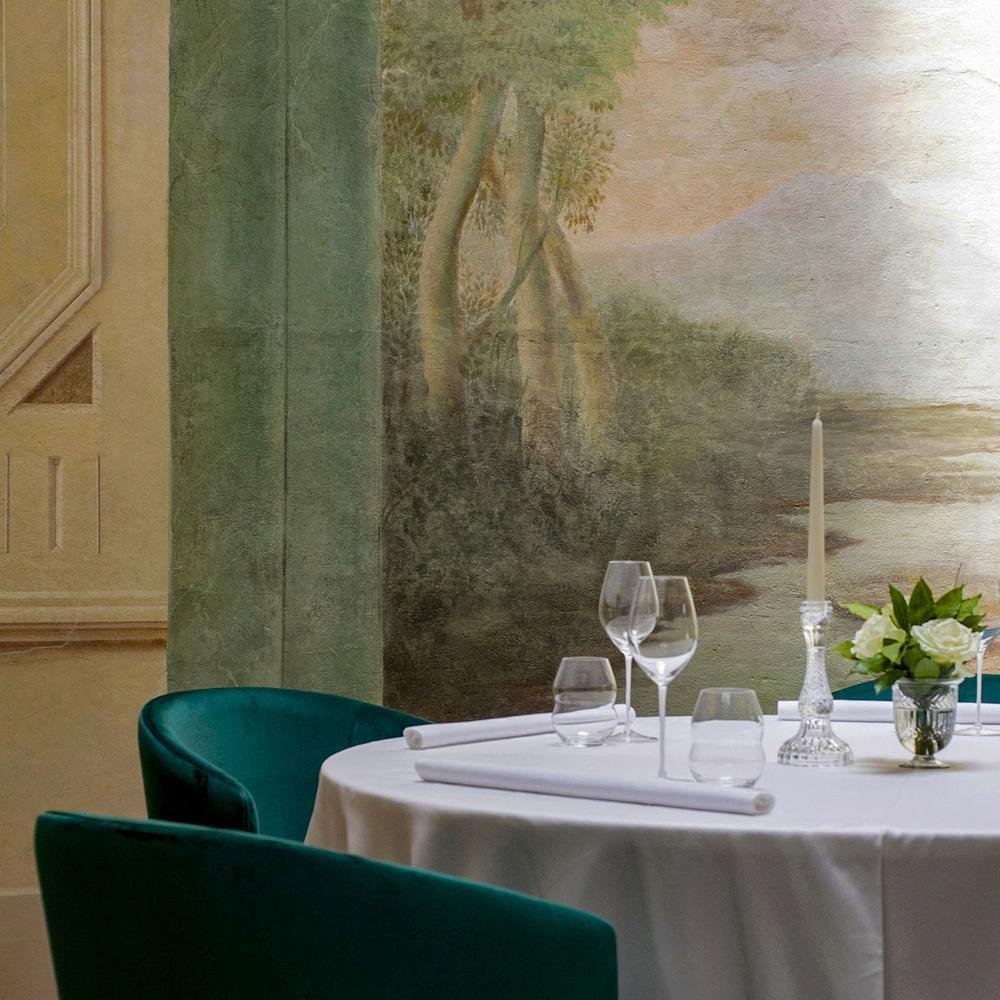
Restaurant
I Tenerumi
On the volcanic island of Vulcano, I Tenerumi holds a Michelin star and a perfect five-radish rating from the We're Smart Green Guide for a plant-based tasting menu that treats vegetables as the main event, not a substitution. Chef Davide Guidara works from an open kitchen, drawing on fermentation, maceration, and garden produce to build a single surprise menu paired with kombucha and herbal cordials, with the Aeolian Islands as backdrop.
- 2 Michelin Stars
At a glance
- Cuisine
- Modern Plant-Based Fine Dining
- Price
- $$$$
- Per person
- $200
- Neighborhood
- Vulcanello
<h2>Dining at the Edge of the Aeolian Archipelago</h2><p>The approach to Vulcano sets the terms of the meal before you sit down. The island's volcanic rock, the sulfurous air, the light that flattens and then deepens as the sun drops over the Tyrrhenian: arriving at I Tenerumi before sunset is not incidental to the experience, it is part of its architecture. The open terrace on via Vulcanello frames a direct view across the archipelago, and the sequence of islands visible from that vantage point gives the evening its opening note. Italy's Michelin-starred restaurants are concentrated in the north, in Piedmont, Lombardy, and Emilia-Romagna. A single-star address on a volcanic island in the Aeolian chain, accessible only by ferry or hydrofoil from Sicily, occupies a genuinely different position on the map of Italian fine dining.</p><p>That geography is not merely picturesque. It disciplines the kitchen. Produce from the mainland arrives with difficulty and at cost. What grows locally, or what can be preserved from seasonal abundance, becomes the logical source. At I Tenerumi, that constraint has shaped a culinary position that is now a deliberate and awarded identity: a plant-based tasting menu built on the garden's output, amplified through preservation techniques, and presented through a single nightly menu with no alternatives. The restaurant holds one Michelin star (2024) and a five-radish rating from the We're Smart Green Guide, the highest designation in that system for vegetable-forward cuisine.</p><h2>Why Vegetables Lead Here, Not Substitute</h2><p>The dominant mode in contemporary Italian fine dining remains protein-centered. Even at restaurants working with seasonal and local frameworks, such as <a href="https://www.enprimeurclub.com/restaurants/atelier-moessmer-norbert-niederkofler-brunico-restaurant">Atelier Moessmer Norbert Niederkofler in Brunico</a> or <a href="https://www.enprimeurclub.com/restaurants/reale-castel-di-sangro-restaurant">Reale in Castel di Sangro</a>, the menu architecture tends to use vegetables as context for meat and fish. The fully plant-based counter-argument at this price tier, in Italy, at four symbols on the price scale, is comparatively rare. I Tenerumi sits closer to a global cohort of serious plant-led addresses such as <a href="https://www.enprimeurclub.com/restaurants/fu-he-hui-shanghai-restaurant">Fu He Hui in Shanghai</a> and <a href="https://www.enprimeurclub.com/restaurants/lamdre-beijing-restaurant">Lamdre in Beijing</a> than it does to the traditional Italian trattoria model or even to the progressive Italian format practised at <a href="https://www.enprimeurclub.com/restaurants/osteria-francescana">Osteria Francescana in Modena</a>.</p><p>Chef Davide Guidara, a former Young Chef award recipient, has declined to label the kitchen's output as vegetarian or vegan, preferring the term plant-based. The distinction is meaningful. Vegetarian and vegan are defined largely by what is excluded. Plant-based, as Guidara uses it, is defined by what is present: the structural and flavour complexity achievable when vegetables, fruits, grains, and fermented preparations are treated as primary ingredients rather than accompaniments. The name of the restaurant carries that argument in miniature. Tenerumi is the young shoot of the zucchini plant, a typically Sicilian ingredient used in pasta and soups across the island, tender and green and frequently overlooked in favour of the squash itself. Naming a fine dining address after that ingredient signals a philosophy before the first course arrives.</p><p>The kitchen's technical vocabulary centres on preservation. Fermentation, maceration, and pickling are the principal tools, used to extend seasonal produce across periods when it would otherwise be unavailable and to develop flavour complexity that raw or simply cooked vegetables rarely achieve alone. Winter produce from the restaurant's own garden runs through the tasting menu, with seasonal ingredients rotating as the calendar changes. The result is a menu that reflects the island's growing conditions directly, rather than importing a generic fine dining vocabulary onto a remote location.</p><h2>The Format and What to Expect</h2><p>I Tenerumi operates on a single surprise tasting menu, with the price of the meal included in the booking. There are no à la carte choices and no alternative menus. The format is common across Italy's most structured fine dining addresses, from <a href="https://www.enprimeurclub.com/restaurants/le-calandre-rubano-restaurant">Le Calandre in Rubano</a> to <a href="https://www.enprimeurclub.com/restaurants/piazza-duomo-alba-restaurant">Piazza Duomo in Alba</a>, but I Tenerumi adds a further constraint: the surprise element means courses are not disclosed in advance. The kitchen communicates through the sequence itself.</p><p>The drink pairing is automatic and non-alcoholic: kombucha and herbal cordials chosen to accompany each course. For wine drinkers, the cellar is available and ordering from it is direct, but the default pairing is the fermented and botanical programme that the kitchen has constructed to run alongside the food. This is not a compromise position. Serious non-alcoholic pairing programmes are now a feature of the most considered tasting menu addresses globally, and the approach here aligns the drink sequence with the kitchen's preservation and fermentation methodology rather than defaulting to a conventional wine list.</p><p>Service is handled by a young team, described across multiple award sources as knowledgeable and capable of building genuine rapport with the table. At a remote island address operating a surprise format, service carries the responsibility of managing expectations and communicating intent. The reports from the We're Smart Green Guide and other sources suggest that responsibility is met without stiffness.</p><h2>Placing I Tenerumi in Italian Fine Dining</h2><p>The geography matters to any honest assessment. Italy's most decorated fine dining addresses, among them <a href="https://www.enprimeurclub.com/restaurants/enoteca-pinchiorri">Enoteca Pinchiorri in Florence</a>, <a href="https://www.enprimeurclub.com/restaurants/enrico-bartolini-milan-restaurant">Enrico Bartolini in Milan</a>, <a href="https://www.enprimeurclub.com/restaurants/dal-pescatore-runate-restaurant">Dal Pescatore in Runate</a>, <a href="https://www.enprimeurclub.com/restaurants/quattro-passi-marina-del-cantone-restaurant">Quattro Passi in Marina del Cantone</a>, and <a href="https://www.enprimeurclub.com/restaurants/uliassi-senigallia-restaurant">Uliassi in Senigallia</a>, operate in cities or well-connected coastal towns. A Michelin-starred kitchen on a Sicilian volcanic island with ferry-only access is logistically unusual, and the La Liste 2025 score of 88 points confirms the level of recognition that has accumulated despite that remoteness. The score places I Tenerumi inside a cohort of serious Italian addresses, not as a regional curiosity but as a restaurant whose culinary argument is being taken seriously by the guides that track the field internationally.</p><p>The plant-based positioning adds a second layer of distinction. Among Michelin-starred restaurants in Italy, fully plant-based kitchens remain a small subset. At the €€€€ price tier, they are smaller still. I Tenerumi occupies a position at the intersection of two selective categories: island fine dining and serious plant-forward cuisine at the leading price point. That intersection defines its peer set more accurately than the star count alone.</p><p>For readers planning a wider Vulcano visit, the island's dining scene has another serious address in <a href="https://www.enprimeurclub.com/restaurants/il-cappero-isola-vulcano-restaurant">Il Cappero</a>, which works the Mediterranean end of the spectrum. The contrast between the two is a useful frame for understanding what I Tenerumi is doing: where Il Cappero draws on the sea and the broader Mediterranean repertoire, I Tenerumi has committed to land, soil, and the specific growing conditions of the volcanic terrain.</p><h2>Planning the Visit</h2><p>Reaching Vulcano requires a ferry or hydrofoil from Milazzo or Messina on the Sicilian mainland, with hydrofoil services running the crossing in under an hour during peak season. The island is small and the restaurant is on via Vulcanello, accessible on foot or by local transport from the port. The recommendation to arrive before sunset is logistically simple to honour given the short distances involved, and the timing aligns the most dramatic natural light with the opening of service. Booking at the €€€€ tier on an island with limited accommodation means coordinating the restaurant reservation with lodging well in advance, particularly in the summer months when ferry traffic and visitor numbers peak. For accommodation options, see <a href="https://www.enprimeurclub.com/hotels/isola-vulcano">our full Isola Vulcano hotels guide</a>. The island's bar and winery offerings are covered in <a href="https://www.enprimeurclub.com/bars/isola-vulcano">our Isola Vulcano bars guide</a> and <a href="https://www.enprimeurclub.com/wineries/isola-vulcano">our Isola Vulcano wineries guide</a>. For a full picture of what to do beyond the table, <a href="https://www.enprimeurclub.com/experiences/isola-vulcano">our Isola Vulcano experiences guide</a> covers the island's broader offer. The complete restaurant picture for the island is in <a href="https://www.enprimeurclub.com/restaurants/isola-vulcano">our full Isola Vulcano restaurants guide</a>.</p><h2>Frequently Asked Questions</h2><dl><dt><strong>What should I eat at I Tenerumi?</strong></dt><dd>There is no choice to make: I Tenerumi offers a single surprise tasting menu, conceived and executed by Chef Davide Guidara. The menu changes with the season, drawing on garden produce and preservation techniques including fermentation and pickling. Awarded one Michelin star in 2024 and five radishes from the We're Smart Green Guide, the menu is fully plant-based. The automatic pairing of kombucha and herbal cordials is included, with the wine cellar available for those who prefer it.</dd><dt><strong>What is the overall feel of I Tenerumi?</strong></dt><dd>The restaurant sits on the volcanic island of Vulcano in the Aeolian archipelago, with a terrace view across the islands that frames the early part of the evening. The format is a single surprise tasting menu at the €€€€ price tier, with a young service team and an open-view kitchen. The awards profile, including a Michelin star and a La Liste score of 88 points in 2025, places it in the serious fine dining bracket. The mood is focused but not formal, with service described by guide reviewers as warm and communicative rather than distant.</dd><dt><strong>Is I Tenerumi family-friendly?</strong></dt><dd>The restaurant operates a single surprise tasting menu at the €€€€ price point, with no à la carte options and no alternative menus. That format requires some engagement with the surprise element and an appetite for a multi-course sequence. For families travelling with younger children who may not suit a long tasting menu format, the structure is worth weighing carefully against the price and the length of the evening. Families with older children or teenagers who eat adventurously, and who are visiting Vulcano specifically for the culinary experience, will find the setting and the service well-suited to the occasion.</dd></dl>
Know before you go
- Dress code
- smart_casual
- Reservations
- essential
- Parking
- on_site_lot
- Payment
- credit_card, debit_card
- Outdoor seating
- Yes
- Groups
- Welcomed
Frequently asked
Is I Tenerumi a family-friendly restaurant?
The format is a single surprise tasting menu with no à la carte alternatives, which means the experience is fixed in pace and sequence. That structure suits focused adults more than young children. The service team is noted for warmth and an ability to build rapport, but the multi-course plant-based progression and Michelin-starred setting pitch the restaurant firmly toward adult diners.
What's the overall feel of I Tenerumi?
The restaurant sits on Isola Vulcano with direct views across the Aeolian archipelago, and the timing recommendation to arrive before sunset shapes the evening from the outset. Chef Davide Guidara cooks from an open kitchen, so the meal unfolds as a transparent, playful sequence rather than a formal procession. A young service team keeps the tone knowledgeable but relaxed, and the automatic pairing of kombucha and herbal cordials reinforces a kitchen-led philosophy rather than a conventional fine-dining script.
Is I Tenerumi award-winning?
I Tenerumi has received recognition including: Arrive at the restaurant before sunset to admire a spectacular view of the Aeolian Islands: the setting is breathtaking, and the extraordinary “plant-based” cuisine, as defined by Chef Davide Guidara refusing the stereotypes of “vegetarian”….
What should I eat at I Tenerumi?
There is no menu choice to make: I Tenerumi serves a single surprise tasting menu, with the price of the meal included in the booking. Chef Davide Guidara builds the sequence around produce from his garden, using preservation techniques including fermentation, maceration, and pickling, drawing on ingredients specific to the Sicilian volcanic terrain. The restaurant holds a Michelin star (2024) and a perfect five-radish rating from the We're Smart Green Guide, and Guidara defines the food as plant-based rather than vegetarian or vegan.
Address
via Vulcanello, Isola Vulcano, 98055, Italy
Vulcanello
How it compares
- Cuisine
- Vegetarian
- Price
- €€€€
- Awards
- Arrive at the restaurant before sunset to admire a spectacular view of the Aeolian Islands: the setting is breathtaking, and the extraordinary “plant-based” cuisine, as defined by Chef Davide Guidara refusing the stereotypes of “vegetarian” or “vegan”, is sure to move you even further. From his open-view kitchen, a single surprise tasting menu is offered (price included), conceived as a journey through numerous often playful tastings. Guidara, previously awarded as a Young Chef, shows great skill in highlighting the winter produce from his garden through preservation techniques such as fermentation, maceration, and pickling, alternating with seasonal ingredients. His distinctive style is complemented by an automatic pairing of kombucha and herbal cordials. But fear not, wine enthusiasts: the cellar is at your full disposal. Making the evening even more special is the young service team: smiling, knowledgeable, and capable of creating a pleasant rapport with clients. An essential gastronomic stop!; Chef Davide Guidara offers only plant-based cuisine in I Tenerumi. Tenerumi is and typically Sicilian vegetable, namely the young shoots of the zucchini plant. A beautiful name that covers the landing: elegance, quality, originality, and a fresh green taste. A real discovery and a serious entry in the We're Smart Green Guide: 5 Radishes!; Chef Davide Guidara offers only plant-based cuisine in I Tenerumi. Tenerumi is and typically Sicilian vegetable, namely the young shoots of the zucchini plant. A beautiful name that covers the landing: elegance, quality, originality, and a fresh green taste. A real discovery and a serious entry in the We're Smart Green Guide: 5 Radishes!; La Liste Top Restaurants (2025): 88pts; Chef: Davide Guidara document.addEventListener("DOMContentLoaded", function() { var el = document.getElementById("Achievements_chefs"); if (el && el.parentNode) { el.parentNode.removeChild(el); } });; Arrive at the restaurant before sunset to admire a spectacular view of the Aeolian Islands: the setting is breathtaking, and the extraordinary “plant-based” cuisine, as defined by Chef Davide Guidara refusing the stereotypes of “vegetarian” or “vegan”, is sure to move you even further. From his open-view kitchen, a single surprise tasting menu is offered (price included), conceived as a journey through numerous often playful tastings. Guidara, previously awarded as a Young Chef, shows great skill in highlighting the winter produce from his garden through preservation techniques such as fermentation, maceration, and pickling, alternating with seasonal ingredients. His distinctive style is complemented by an automatic pairing of kombucha and herbal cordials. But fear not, wine enthusiasts: the cellar is at your full disposal. Making the evening even more special is the young service team: smiling, knowledgeable, and capable of creating a pleasant rapport with clients. An essential gastronomic stop!; Michelin 1 Star (2024)
- Notes
- This venue
Atelier Moessmer Norbert Niederkofler
- Cuisine
- Italian, Creative
- Price
- €€€€
- Awards
- Michelin 3 Star, World's 50 Best
- Notes
- Italian, Creative, €€€€
- Cuisine
- Italian, Italian Contemporary
- Price
- €€€€
- Awards
- Michelin 3 Star, World's 50 Best
- Notes
- Italian, Italian Contemporary, €€€€
- Cuisine
- Italian - French, Italian Contemporary
- Price
- €€€€
- Awards
- Michelin 3 Star, World's 50 Best
- Notes
- Italian - French, Italian Contemporary, €€€€
- Cuisine
- Creative
- Price
- €€€€
- Awards
- Michelin 3 Star, World's 50 Best
- Notes
- Creative, €€€€
- Cuisine
- Progressive Italian, Creative
- Price
- €€€€
- Awards
- Michelin 3 Star, World's 50 Best
- Notes
- Progressive Italian, Creative, €€€€
In residence

Similar places
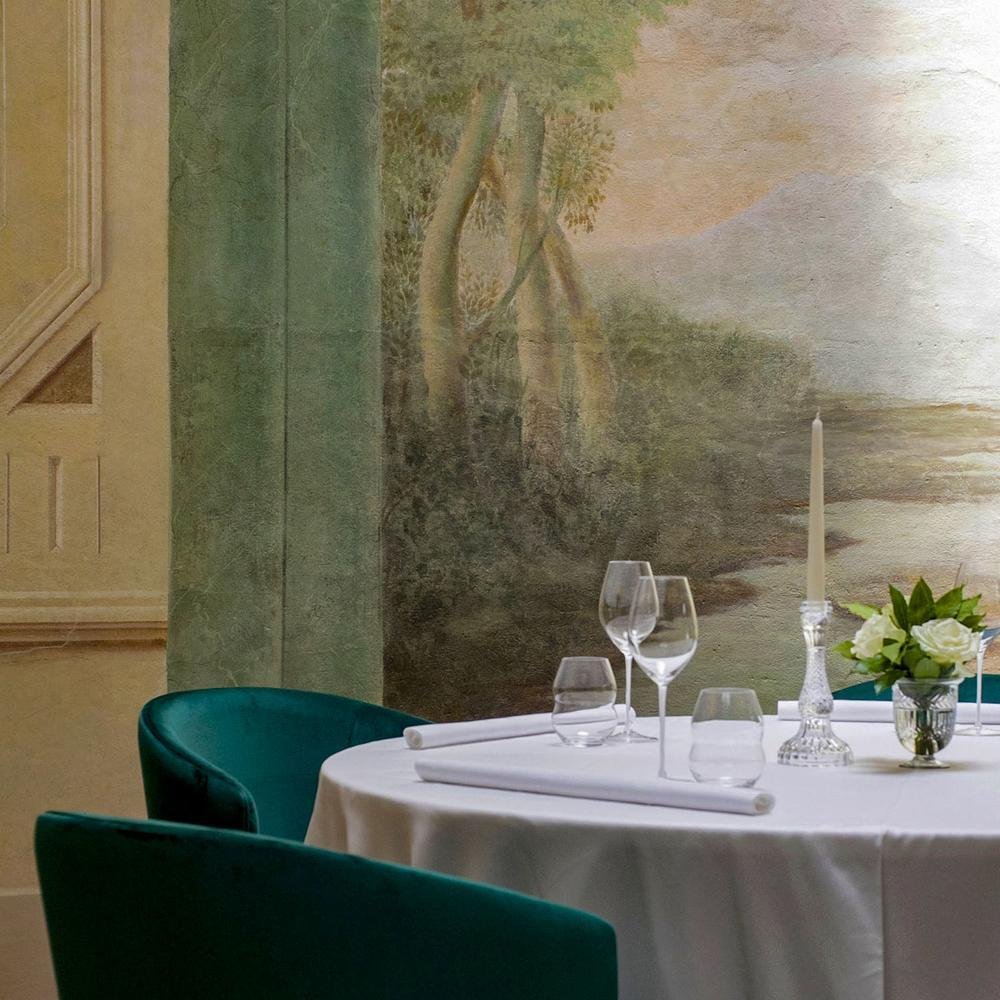
Modern Sicilian Seafood
Il Cappero
Isola Vulcano, Italy
★
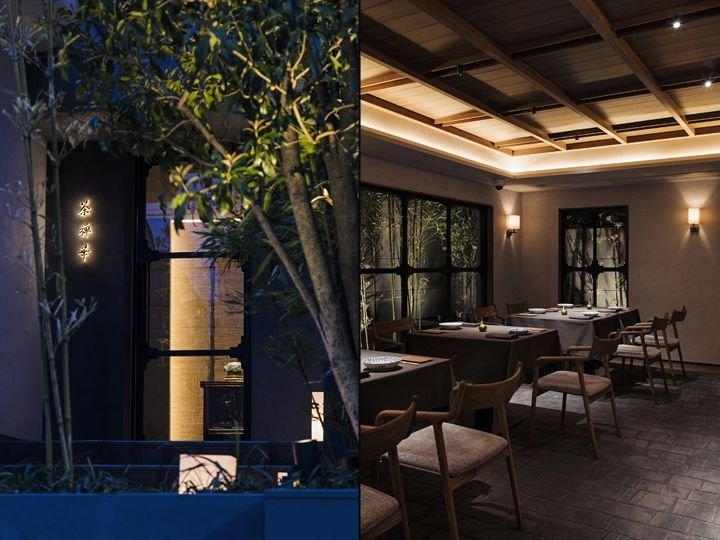
Modern Chinese Fine Dining
Sazenka
Tokyo, Japan
★★★ · 50 Best
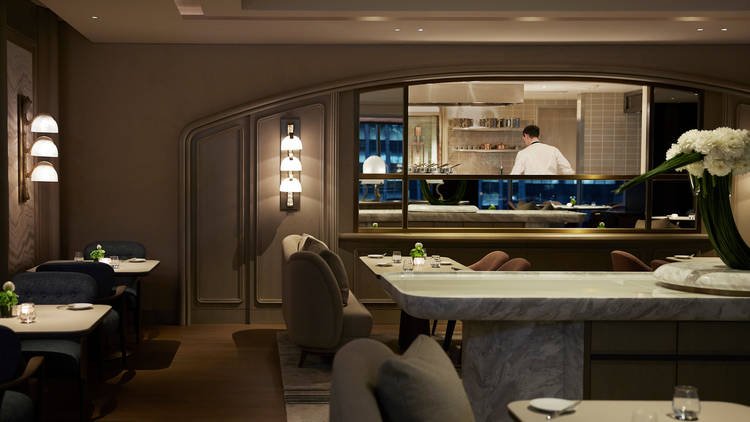
Sézanne
Tokyo, Japan
★★★ · 50 Best
Japanese-influenced Californian Kaiseki
Single Thread Farm
Healdsburg, United States
★★★ · 50 Best
French Seafood Fine Dining
Le Bernardin
New York City, United States
★★★ · 50 Best
Modern Korean Tasting Menu
Atomix
New York City, United States
★★ · 50 Best