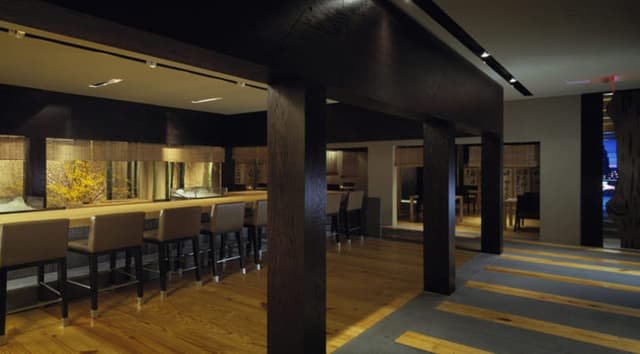
Restaurant
Masa
Three Michelin stars since at least 2024, a Forbes Travel Guide Five-Star rating, and a 26-seat counter built around a hinoki wood bar: Masa at Columbus Circle operates at the upper end of New York's omakase tier. The pre-set menu draws on seafood flown daily from Japan, and a seasonally rotating sake list with a private-label expression makes the beverage programme as considered as the food.
- 3 Michelin Stars
- World's 50 Best · #27
At a glance
- Cuisine
- Traditional Japanese Omakase
- Price
- $$$$
- Per person
- $750
- Hours
- Mon: Closed; Tue: 12–2 PM, 5–9:30 PM; Wed: 12–2 PM, 5–9:30 PM; Thu: 12–2 PM, 5–9:30 PM; Fri: 12–2 PM, 5–9:30 PM; Sat: 12–2 PM, 5–9:30 PM; Sun: Closed
- Neighborhood
- Midtown West
- Rating
- 4.2 (578)
<h2>New York's Highest-Priced Omakase Counter, Placed in Context</h2><p>At the leading of New York's omakase market, a handful of counters compete on a different axis than the broader sushi scene. Seat counts are low, waiting lists are long, and the price per head moves into territory more commonly associated with multi-course tasting menus at French three-stars like <a href="https://www.enprimeurclub.com/restaurants/the-french-laundry">The French Laundry in Napa</a> or <a href="https://www.enprimeurclub.com/restaurants/alinea">Alinea in Chicago</a>. Masa, on the fourth floor of the Time Warner Center at Columbus Circle, has held three Michelin stars continuously through at least 2024 and 2025, and appears on the Forbes Travel Guide Five-Star list — a combination that places it in a peer set of perhaps three or four omakase counters in North America capable of operating at that credential level. The Opinionated About Dining ranking for North America has placed it between 56th and 75th across 2023 and 2024, and 67th in 2025, which reflects a competitive upper tier rather than a stable pinnacle — the field around it has tightened as the New York omakase scene has deepened over the past decade.</p><p>For broader orientation across the city's dining scene, see <a href="https://www.enprimeurclub.com/restaurants/new-york-city">our full New York City restaurants guide</a>. For comparison points within the Japanese counter format specifically, <a href="https://www.enprimeurclub.com/restaurants/sushi-noz">Sushi Noz</a>, <a href="https://www.enprimeurclub.com/restaurants/sushi-amane-new-york-city-restaurant">Sushi Amane</a>, <a href="https://www.enprimeurclub.com/restaurants/kosaka-new-york-city-restaurant">Kosaka</a>, <a href="https://www.enprimeurclub.com/restaurants/sushi-nakazawa-new-york-city-restaurant">Sushi Nakazawa</a>, and <a href="https://www.enprimeurclub.com/restaurants/sushi-yasuda-new-york-city-restaurant">Sushi Yasuda</a> each occupy distinct positions in the city's omakase tier structure, at varying price points and formats.</p><h2>The Counter, the Room, and What the Format Demands</h2><p>The dining room at Masa holds 26 seats in total, with 10 of those positioned at the hinoki wood counter itself. Hinoki , a Japanese cypress prized for its pale colour, fine grain, and faint citrus fragrance , has become the material marker of serious omakase spaces globally, but the counter at Masa is among the most cited references for the format in the Western hemisphere. Under the room's lighting, the wood reads almost white. The counter configuration places guests close to the preparation, which matters: in omakase at this level, proximity is part of the exchange. Watching technique, asking questions about specific fish or rice temperature, and occasionally receiving a piece handed directly from the chef are all part of how the format communicates.</p><p>The room operates Tuesday through Saturday for both lunch (noon to 2 pm) and dinner (5 to 9:30 pm), and is closed Sunday and Monday. With 26 seats and a four-hour daily service window, the total number of covers served each week is structurally limited , which explains why the reservation process is tightly managed. Reservations open by phone on Monday from 10 am to 8 pm and Saturday from noon to 8 pm. There is no dress code; the counter's atmosphere is ceremonial without being formal in the conventional sense.</p><h2>The Sake Programme as a Structural Element of the Meal</h2><p>In the wider conversation about omakase pairing, sake is often treated as an afterthought , a list of four or five options appended to a wine programme that does most of the work. At Masa, the approach is structurally different. The sake selection rotates seasonally and features six varieties alongside a private-label expression developed specifically for the restaurant. The range is designed to cover distinct brewing styles rather than clustering around a single register: lighter, more fragrant expressions sit alongside fruity and more refined options, and nigori sake , unfiltered, with a milky appearance and a sweeter, rounder profile , appears as a deliberate contrast to the cleaner, drier styles that dominate most pairing lists.</p><p>This matters editorially because it reflects a specific stance on how beverage and food interact in Japanese counter dining. Sake, unlike wine, shares fermentation grain with the rice in the sushi itself, which creates a kind of compositional continuity across the meal that no wine programme can replicate. At the luxury end of the omakase market , where foie gras nigiri and Osetra caviar appear as course elements , the sake programme has to hold its own against the weight and richness of the ingredients. The private-label inclusion signals that the programme is treated as a sourcing project, not simply a list assembled from distributor allocations.</p><p>For guests planning a comparable beverage-forward experience in other formats, <a href="https://www.enprimeurclub.com/restaurants/lazy-bear">Lazy Bear in San Francisco</a> and <a href="https://www.enprimeurclub.com/restaurants/single-thread">Single Thread Farm in Healdsburg</a> both treat the pairing programme as an integral structural element rather than an add-on, though through entirely different culinary traditions. Outside the United States, <a href="https://www.enprimeurclub.com/restaurants/sushi-masaki-saito-toronto-restaurant">Sushi Masaki Saito in Toronto</a> and <a href="https://www.enprimeurclub.com/restaurants/endo-at-the-rotunda-london-restaurant">Endo at The Rotunda in London</a> represent the North American and European ends of the same high-end omakase conversation.</p><h2>The Menu: No Choices, Considerable Latitude</h2><p>Masa operates on a pre-set format with no printed menu for guests. The meal opens with a sequence of approximately five appetisers , formats have included hot pots with meat or vegetables served in broth, seaweed and clam preparations, and toro tartare with caviar. Sushi courses follow, built around seafood sourced daily from Japan and from international suppliers, with the selection covering tuna, sea bream, eel, sea urchin, octopus, scallops, squid, clams, and fluke depending on the day. White truffle appears over the rice in certain preparations; abalone and foie gras nigiri have been documented as recurring elements at the luxury end of the menu's register.</p><p>The rice itself has attracted specific attention in critical coverage. Served lukewarm rather than at room temperature, the individual grains remain distinguishable within the ball, and the slight temperature contrast between the rice and the cold fish produces a textural and thermal dynamic that separates it from the more homogenous rice compression common at mid-tier omakase counters. A buckwheat tea mid-meal and a grapefruit granite at the close round out the structure. Guests who want a course repeated can ask; the format allows for it.</p><p>The hot pot component is worth noting as a structural choice. In a meal organised almost entirely around raw preparation, a cooked broth course serves as a textural and thermal interruption , a device that high-end Japanese kaiseki uses routinely but that most sushi-focused omakase formats omit. Its inclusion at Masa reflects a broader approach that treats the meal as a composition rather than a sequence of individual pieces.</p><h2>Luxury Ingredients in a North American Context</h2><p>North American tasting menus at the four-dollar-sign tier tend to resolve into two broad approaches: French-influenced classicism (as at <a href="https://www.enprimeurclub.com/restaurants/emeril-s-new-orleans-restaurant">Emeril's in New Orleans</a> or <a href="https://www.enprimeurclub.com/restaurants/providence">Providence in Los Angeles</a>) or contemporary formats that use luxury ingredients as a baseline rather than an accent. Masa belongs to neither category cleanly. The use of white and black truffles, Osetra caviar, and foie gras within a Japanese omakase structure represents a deliberate overlay of Western luxury signifiers onto a format that originated in restraint and seasonal precision. This creates a tension that is either the point or a complication, depending on the diner's frame of reference. The Michelin committee has awarded it three stars consistently; La Liste scored it 89 points in 2025 and 83 in 2026, a small but notable decline worth watching across future editions.</p><p>For comparison within New York's broader ultra-premium dining tier, <a href="https://www.enprimeurclub.com/restaurants/alinea">Alinea</a> in Chicago and contemporaries like Eleven Madison Park, Per Se, and Atomix each anchor different ends of the same price bracket, with the Korean-influenced formats at Atomix and Jungsik New York representing the most significant recent challengers to French and Japanese dominance at the leading of the market.</p><h2>Planning a Visit</h2><p>Masa is on the fourth floor of the Time Warner Center, 10 Columbus Circle, Manhattan. The address places it within easy reach of Central Park South hotels and the Lincoln Center area. For accommodation options nearby, see <a href="https://www.enprimeurclub.com/hotels/new-york-city">our full New York City hotels guide</a>. Reservations are taken by phone only, opening Monday from 10 am to 8 pm and Saturday from noon to 8 pm, and the 26-seat capacity means lead times are substantial. Bar Masa, on the same floor, offers a less structured version of the format for guests who want proximity to the kitchen's sourcing and style without the full omakase commitment. For pre- or post-dinner options in the neighbourhood, <a href="https://www.enprimeurclub.com/bars/new-york-city">our New York City bars guide</a>, <a href="https://www.enprimeurclub.com/wineries/new-york-city">wineries guide</a>, and <a href="https://www.enprimeurclub.com/experiences/new-york-city">experiences guide</a> cover the wider city.</p><h2>What People Recommend at Masa</h2><p>Forbes Travel Guide inspectors specifically identify the sushi counter seats , the 10 positions at the hinoki bar , as the seats to request, ahead of the table seating in the wider room. The reasoning is direct: counter placement puts guests in contact with the preparation, and at a counter of this calibre, watching technique is part of the value. The sake programme draws consistent recommendation, particularly the nigori expression and the private-label variety. The rice preparation , lukewarm, grain-distinct, with white truffle in certain courses , appears in almost every piece of critical coverage as the specific technical element that separates Masa from its peer counters. Chef Masayoshi Takayama's three-Michelin-star credential and the restaurant's 2009 ranking of 27th on the World's 50 Best list (32nd in 2005) establish the historical foundation; the current OAD ranking of 67th in North America for 2025 reflects where it sits in a more populated field today.</p>
Know before you go
- Dress code
- smart_casual
- Reservations
- essential
- Accessibility
- wheelchair_accessible
Frequently asked
What are the opening hours for Masa?
Hours at Masa: Hours: Monday Closed Tuesday 12–2 pm, 5–9:30 pm Wednesday 12–2 pm, 5–9:30 pm Thursday 12–2 pm, 5–9:30 pm Friday 12–2 pm, 5–9:30 pm Saturday 12–2 pm, 5–9:30 pm Sunday Closed.
What cuisine category does Masa fall under?
Masa is categorized in our database as Sushi, Japanese.
What's Masa known for in terms of accolades?
Masa has received recognition including: Masa is a Forbes Travel Guide Five-Star restaurant known for world-class sushi and a 26-course pre-set menu.; La Liste Top Restaurants (2026): 83pts; Opinionated About Dining Top Restaurants in North America Ranked #67 (2025); La Liste Top ….
What do people recommend at Masa?
Forbes Travel Guide inspectors specifically call out the 10 seats at the hinoki wood counter as the ones to request — watching the chefs work and occasionally being served nigiri directly by hand is the experience the room is built around. The sake programme draws consistent attention as well: six rotating varieties plus a private-label sake, with the unfiltered nigori cited as a particular highlight. The rice, served lukewarm and paired with cold fish, is noted as a reference point in its own right — some who have eaten at the counter describe any other omakase rice as falling short by comparison.
What's the price range at Masa?
Pricing at Masa is listed as $$$$.
What's Masa's location?
Masa is located at The Shops at, 10 Columbus Cir Floor 4, New York, NY 10019, New York City.
Is there a head chef associated with Masa?
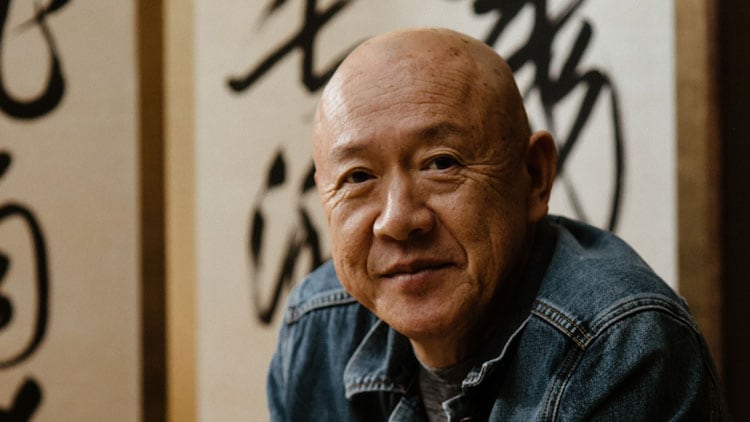
The chef associated with Masa is Masayoshi Takayama.
Address
The Shops at, 10 Columbus Cir Floor 4, New York, NY 10019
Midtown West
How it compares
- Cuisine
- Sushi, Japanese
- Price
- $$$$
- Awards
- Masa is a Forbes Travel Guide Five-Star restaurant known for world-class sushi and a 26-course pre-set menu.; La Liste Top Restaurants (2026): 83pts; Opinionated About Dining Top Restaurants in North America Ranked #67 (2025); La Liste Top Restaurants (2025): 89pts; **Our Inspector's Highlights The best seats in the house are at the sushi bar. Request to sit in one of the 10 oversized leather chairs at the pristine hinoki wood table, which shines almost white under the lighting. Watch the sushi chefs prepare food and ask questions about the dishes—sometimes you’re even served sushi right out of the chef’s hand!Get the sake — Masa’s forte and a Japanese favorite. The list changes seasonally, but features six varieties, plus a private label, that showcases a variety of flavors and brewing techniques. Some sakes are light and fragrant while others are fruity and refined. We love the nigori sake, an unfiltered, milky-white beverage with a sweet, fruity flavor.Once you've had Masa’s rice, any other rice will seem tepid in comparison. Served lukewarm, the sticky rice balls are covered in white truffles — you can taste each individual grain, and the slight contrast in temperature with the cold fish gives the rice a creamy, rich texture.** **Things to Know Masa is located on the fourth floor of the Time Warner Center at 10 Columbus Circle in New York. If you’re looking for a dressed-down version of Masa’s dining experience, Bar Masa, a more casual sushi restaurant from Takayama, is located on the same floor.Don’t let the hefty price tag on dinner at Masa scare you into wearing your best duds. The dining room at this Manhattan sushi restaurant doesn’t have a stuffy dress code. Dress comfortably and casually.Masa requires reservations, having just 26 seats in the whole place and serving lunch and dinner during a four-hour time period only. To snag a table at the Manhattan sushi restaurant, call the reservation line beginning Monday from 10 a.m. to 8 p.m. or Saturday from noon to 8 p.m.** **Treatments:** The Food There is no menu; the meal is a pre-set and starts with five appetizers like hot pots, seaweed and clam salad or toro tartare and caviar. That’s followed by green tea and sushi featuring fresh seafood — you’ll see everything from tuna and sea bream to eel and sea urchin.The meal includes a digestion-aiding buckwheat tea and a grapefruit granite that finishes things on a light, refreshing note. If you’re still hankering for more, you can ask the chef to repeat any course.Seafood steals the show at Masa. The sushi courses feature exotic seafood flown in daily from Japan and from around the world. Toro, caviar, octopus, scallops, squid, clams and fluke — it will all be on the menu!Another standout: the hot pots, a combination of meat or veggies cooked in a hot broth placed on the table in a pot. You eat the hearty ingredients, then soak up the broth with bread. We were served a delicious chopped pike eel in a rich sauce that we sopped up to the last bite. **Amenities:** 10 Columbus Circle, New York, New York 10019; There is nothing like an omakase in the care of Chef Masa Takayama. The commotion of Columbus Circle gives way to the calm, collected ceremony of a room anchored by a strikingly smooth hinoki counter. Everything is in place, as chefs and servers work with a kind of harmony that recalls ballet. Every decision, every move, is in the service of his distinctive style, which many have copied but none have mastered. Fragrant white and black truffles, pearly beads of Osetra caviar, and vibrant garnishes make for brilliant touches that straddle the line between luxury and excess. Few have both the imagination and the know-how to make foie gras nigiri, and few serve abalone so meltingly tender. It is a captivating experience that is singularly memorable.; Michelin 3 Stars (2025); Opinionated About Dining Top Restaurants in North America Ranked #75 (2024); Michelin 3 Stars (2024); Opinionated About Dining Top Restaurants in North America Ranked #56 (2023); World's 50 Best Best Restaurants #27 (2009); World's 50 Best Best Restaurants #32 (2005)
- Notes
- This venue
- Cuisine
- French, Seafood
- Price
- $$$$
- Awards
- Michelin 3 Star, World's 50 Best
- Notes
- French, Seafood, $$$$
- Cuisine
- Modern Korean, Korean
- Price
- $$$$
- Awards
- Michelin 2 Star, World's 50 Best
- Notes
- Modern Korean, Korean, $$$$
- Cuisine
- French, Contemporary
- Price
- $$$$
- Awards
- Michelin 3 Star, World's 50 Best
- Notes
- French, Contemporary, $$$$
- Cuisine
- French, Vegan
- Price
- $$$$
- Awards
- Michelin 3 Star, World's 50 Best
- Notes
- French, Vegan, $$$$
- Cuisine
- Progressive Korean, Korean
- Price
- $$$$
- Awards
- Michelin 3 Star
- Notes
- Progressive Korean, Korean, $$$$
In residence
Similar places
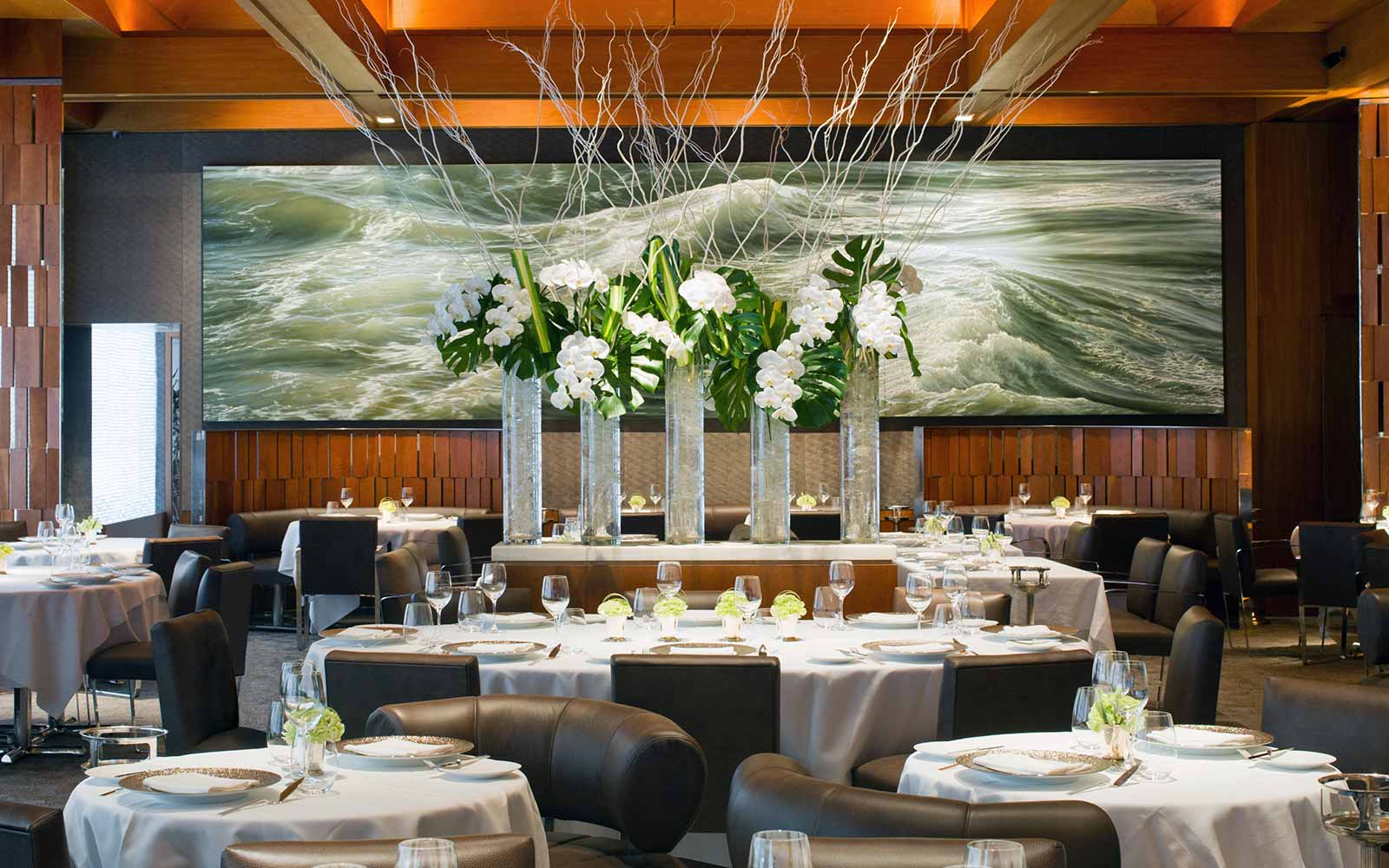
French Seafood Fine Dining
Le Bernardin
New York City, United States
★★★ · 50 Best
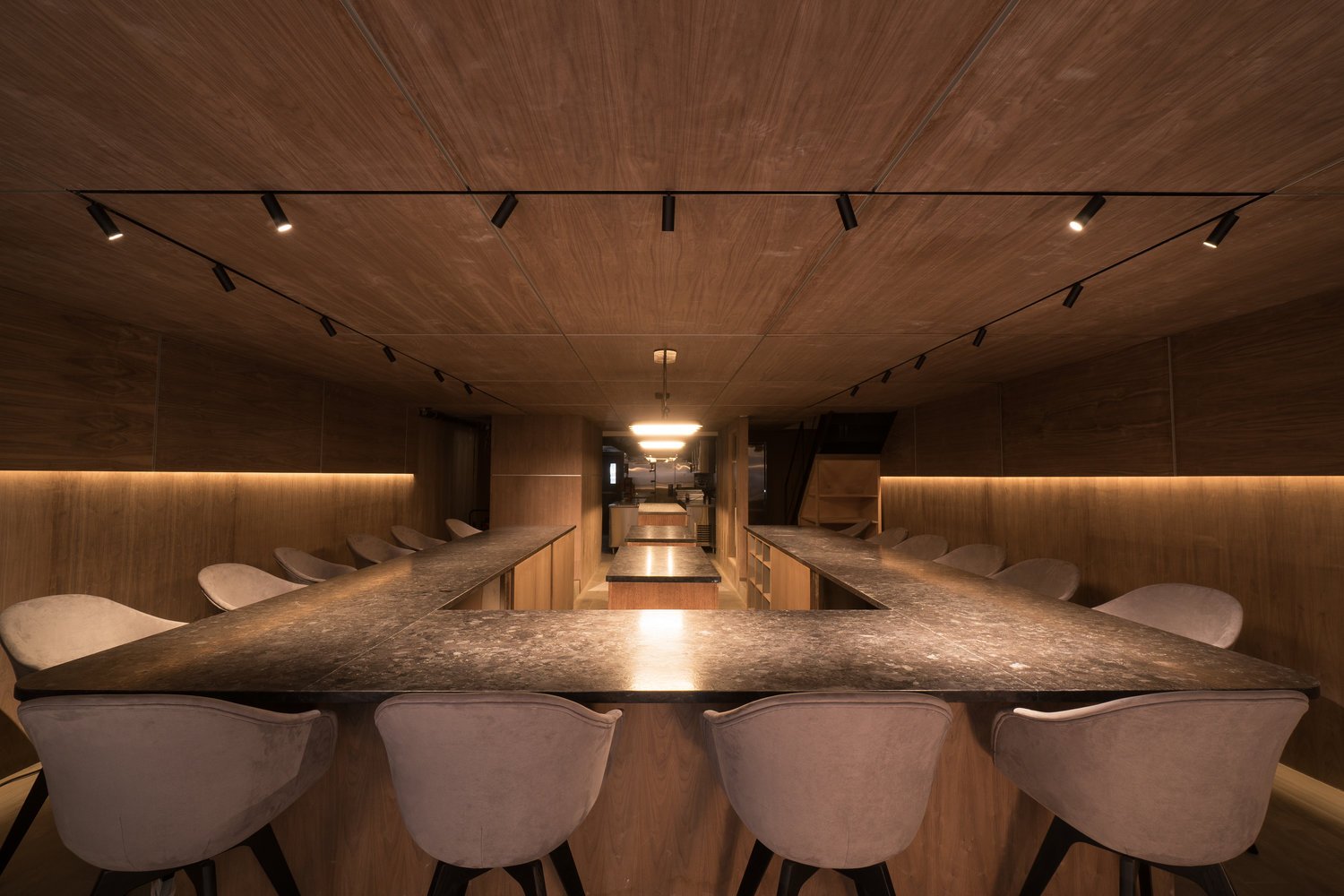
Modern Korean Tasting Menu
Atomix
New York City, United States
★★ · 50 Best
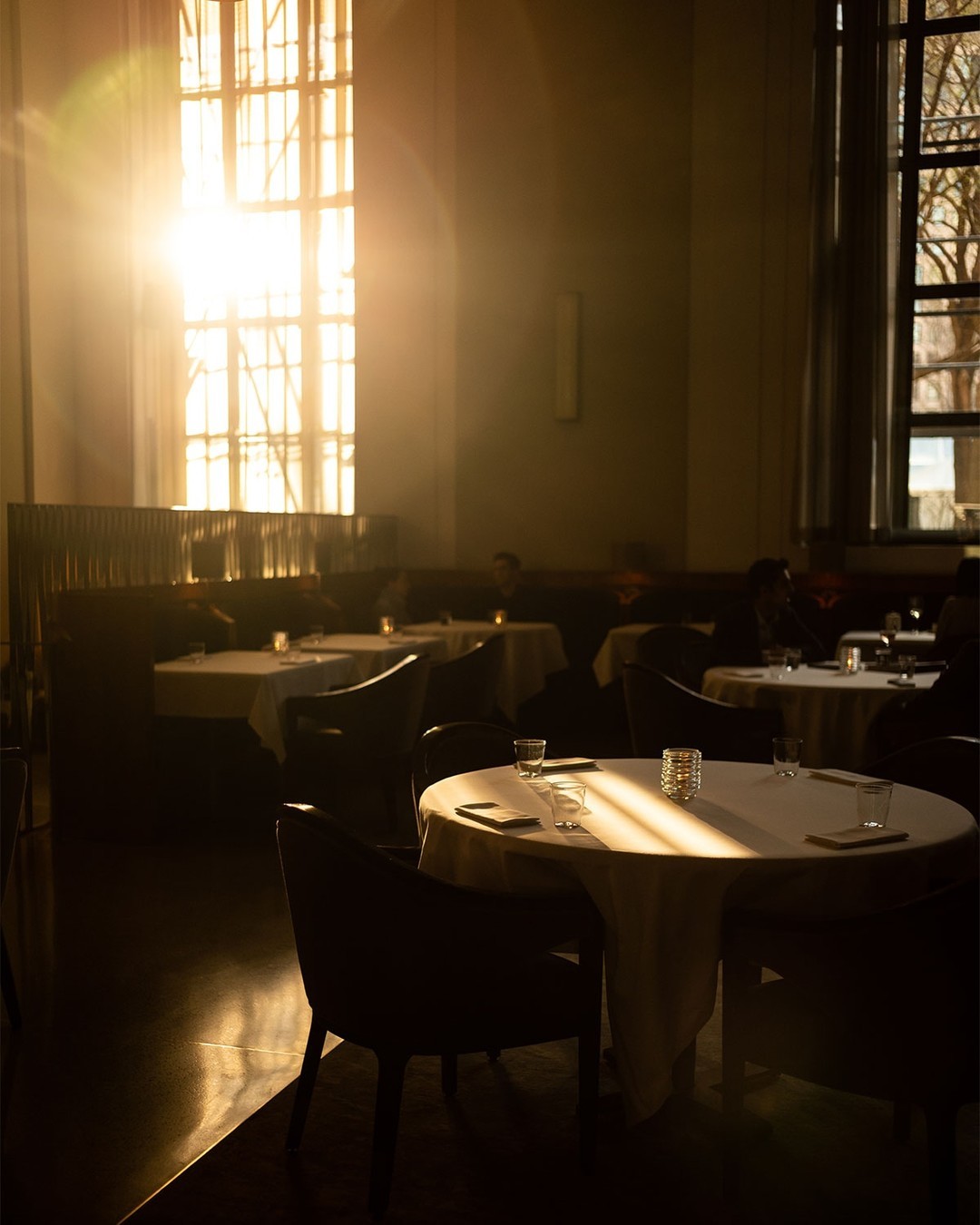
Contemporary Plant-Based Fine Dining
Eleven Madison Park
New York City, United States
★★★ · 50 Best
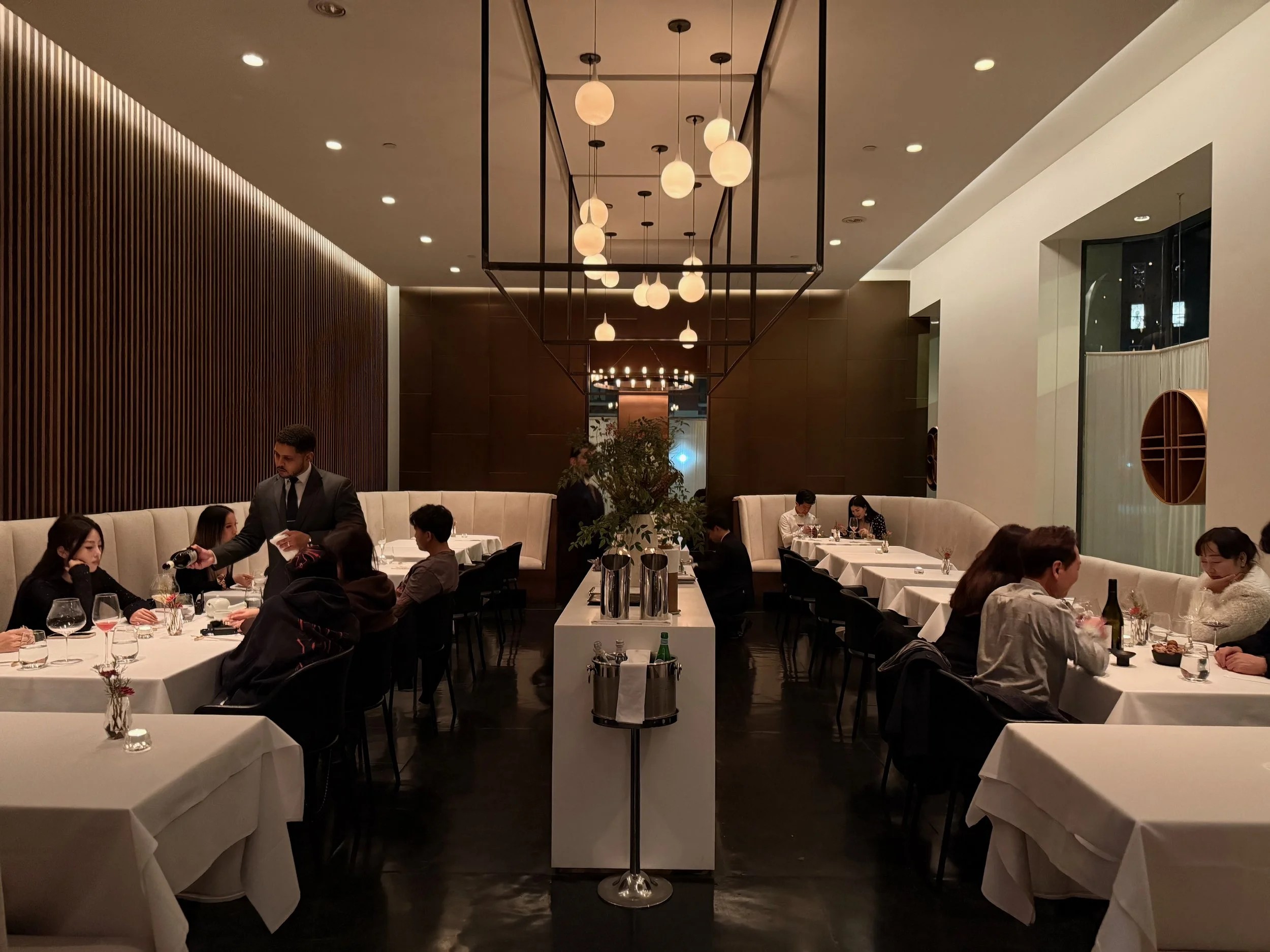
Modern Korean Fine Dining
Jungsik New York
New York City, United States
★★★ · 50 Best
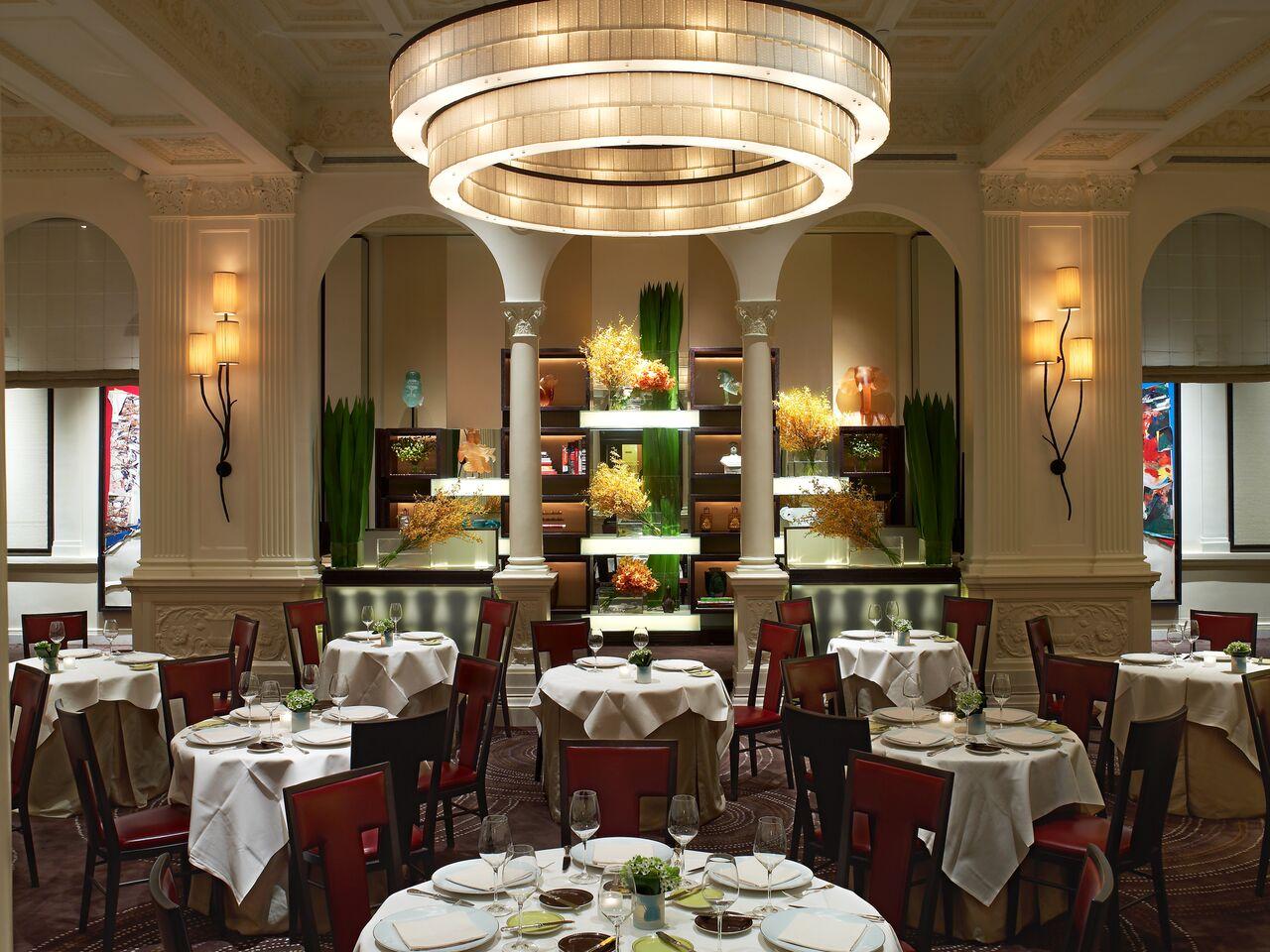
Modern French Fine Dining
Daniel
New York City, United States
★ · 50 Best
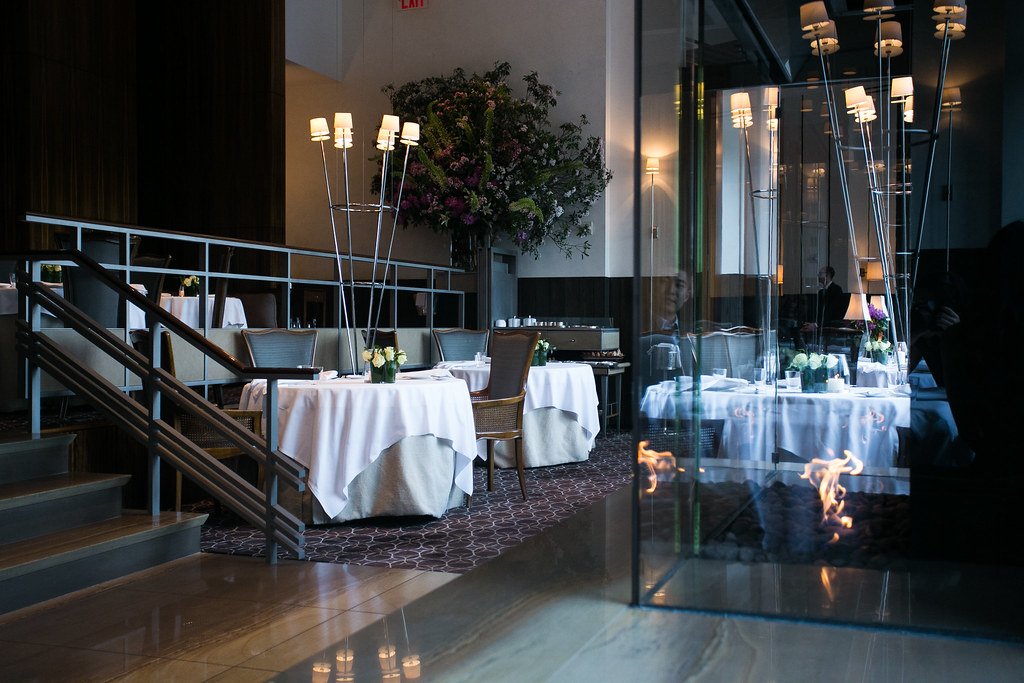
French Fine Dining Tasting Menu
Per Se
New York City, United States
★★★ · 50 Best