Restaurant
Ogata
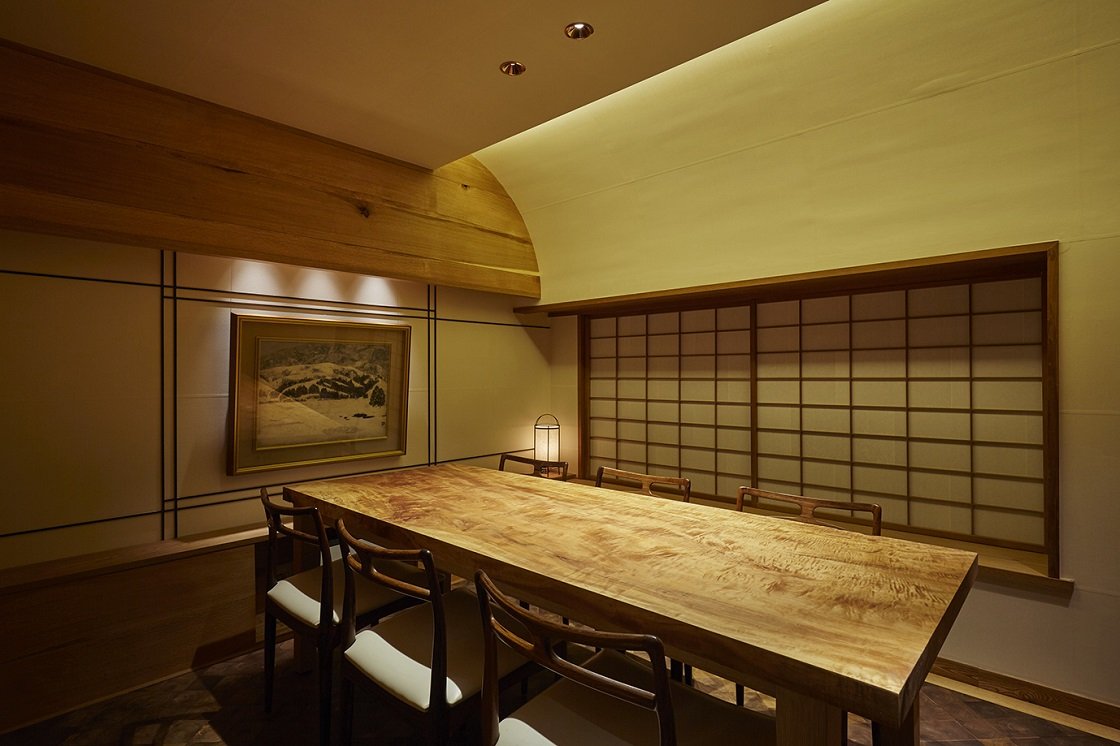
Ogata in Kyoto's Shimogyo Ward holds Tabelog Gold in 2026 and two Michelin stars, placing it firmly in Kyoto's top tier of kaiseki. The 16-seat room — eight counter places plus one private room — runs two seatings nightly, with dinners averaging JPY 60,000–79,999. Tabelog's "100 Best Japanese Cuisine West" recognition and a La Liste score of 96 points confirm its standing in Japan's most competitive culinary conversation.
- 2 Michelin Stars
At a glance
- Cuisine
- Kaiseki Omakase
- Price
- $$$$
- Per person
- $270
- Hours
- Mon: 4–9 PM; Tue: 4–9 PM; Wed: 4–9 PM; Thu: 4–9 PM; Fri: 4–9 PM; Sat: 4–9 PM; Sun: 4–9 PM
- Neighborhood
- Shimogyo-Ku
- Rating
- 4.4 (176)
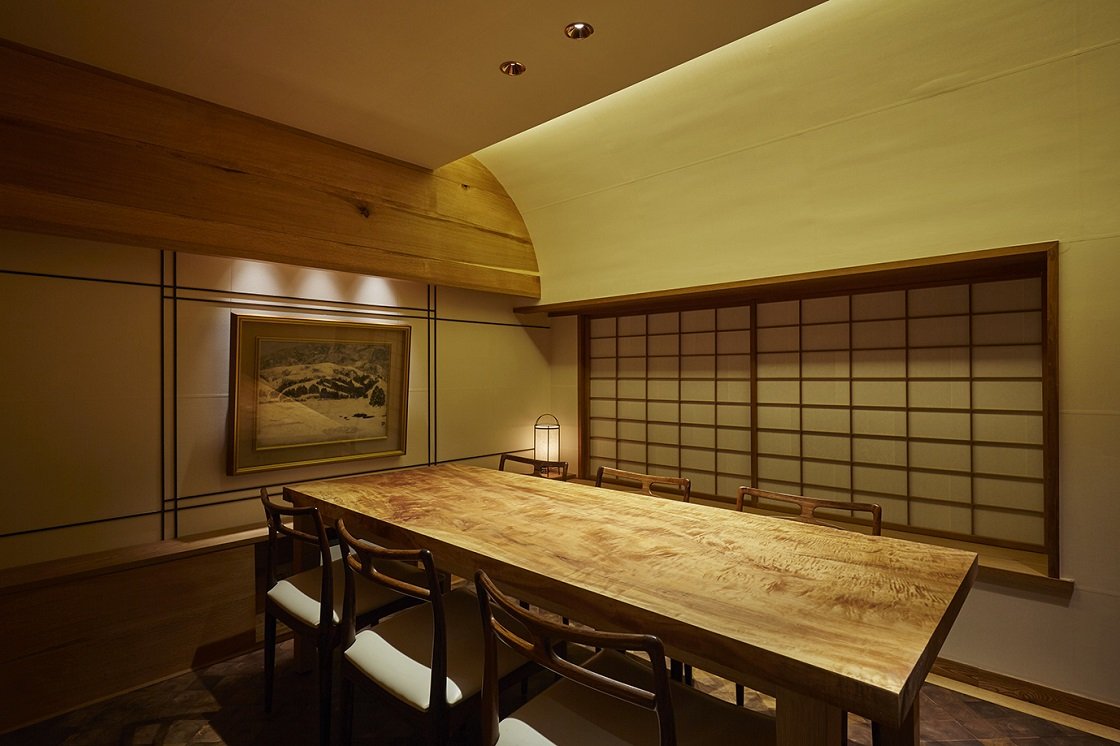
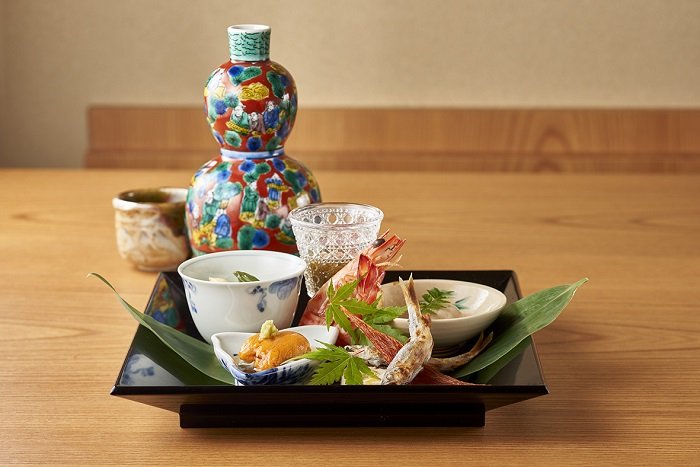
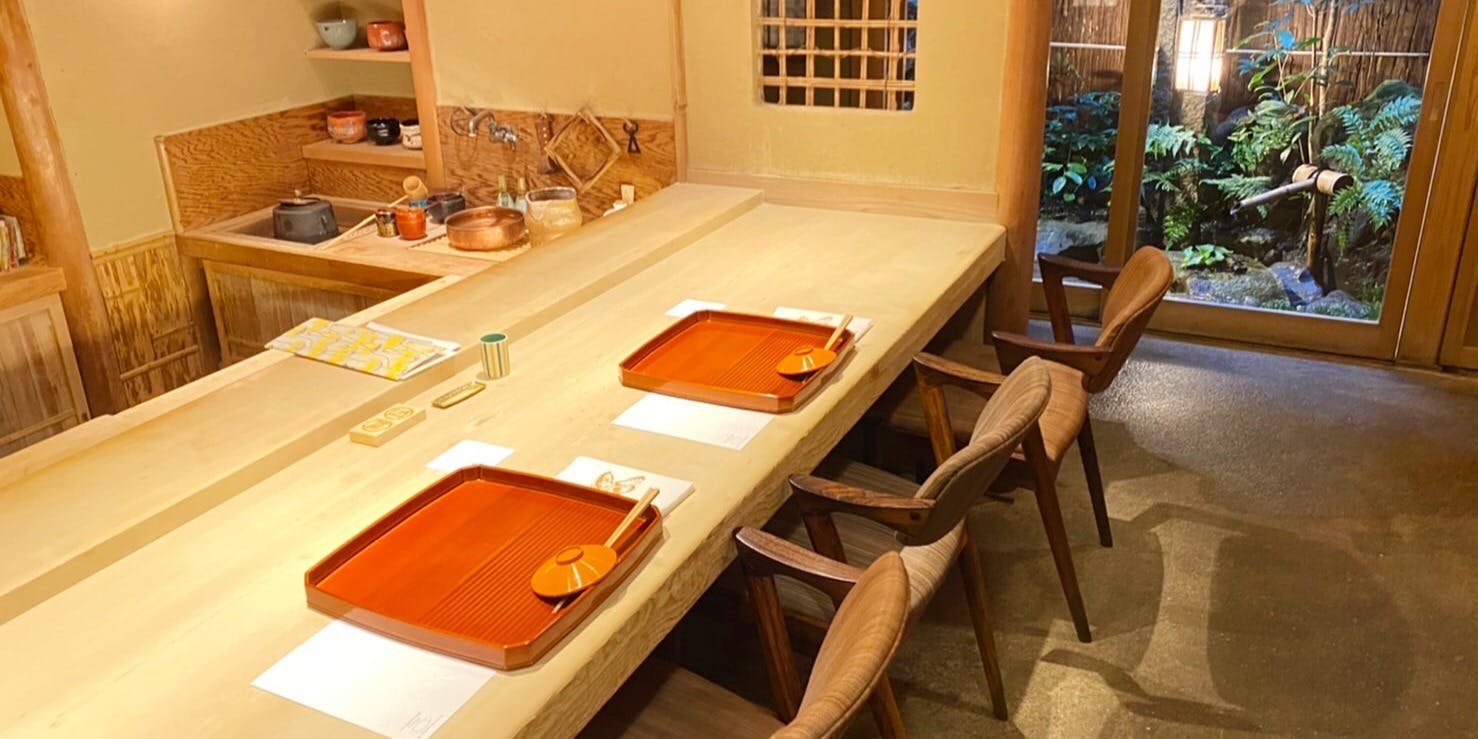
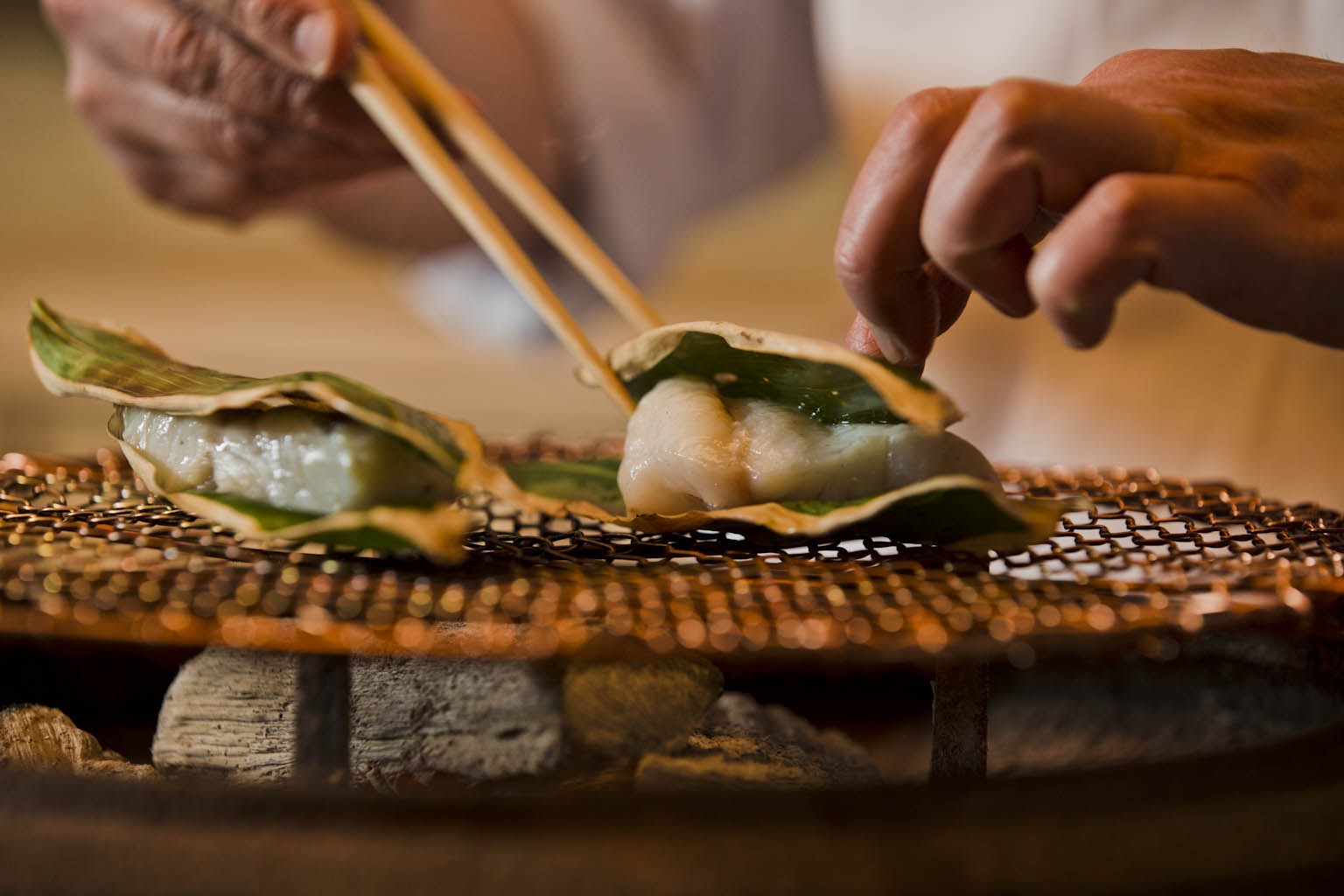
<h2>Where Kyoto's Kaiseki Tradition Meets Precision at the Counter</h2><p>Shimogyo Ward sits on the city's commercial and transit spine, a few hundred metres south of the Shijo retail corridor, and it is an address that surprises visitors expecting kaiseki to live only in Higashiyama's lantern-lit lanes. The neighbourhood is workday Kyoto: fabric wholesalers, small offices, shotgun residences. Inside that context, Ogata operates with the formality and deliberateness of the kaiseki tradition it belongs to, which makes the contrast between exterior and interior all the more pronounced. The room holds 16 guests — eight at the counter, up to eight in a single private room — and runs two seatings nightly at 16:00 and 19:00. The counter seats are where the discipline of this style of cooking becomes most legible.</p><h2>The Kaiseki Frame: Local Ingredients, Technique as Infrastructure</h2><p>Kaiseki in Kyoto is a cuisine built on restraint and seasonal fidelity. The canonical ingredients are not abstract: Tamba matsutake, harvested from the mountains northwest of the city; Maizuru crab from the Sea of Japan coast; Kyoto vegetables , the kyo-yasai group, cultivated in local soil with varieties that have been selected over centuries for flavour rather than yield. These ingredients arrive at the counter as the core argument the cuisine makes about time and place. The technique exists to let that argument land without noise.</p><p>What Ogata represents within this tradition is the kind of sustained, technically rigorous practice that Tabelog's peer community has recognised with Gold awards in 2017, 2018, 2019, 2020, 2021, 2022, 2023, and 2026 , eight Gold years in a ten-year window, with Silver in 2024 and 2025. That record is not a marketing artefact; it reflects consistent peer evaluation across the most competitive regional category in Japan. The restaurant also appears in Tabelog's "100 Best Japanese Cuisine West" selections for 2021, 2023, and 2025, a list that positions it against the broadest field of kaiseki and washoku houses in western Japan.</p><p>Two Michelin stars (awarded in 2024 and 2025) and a La Liste score of 96 points in 2025 and 96 in 2026 place Ogata inside the top tier of Kyoto kaiseki when assessed by international standards as well as domestic ones. For context, La Liste scores above 95 are reserved for a small number of restaurants globally. Opinionated About Dining, which aggregates critic and specialist evaluations, ranked Ogata #11 in Japan in 2023 and #22 in 2024 , positions that reflect the level of attention this address draws from the community of serious diners who travel specifically to eat in Japan. The Tabelog score of 4.58 in 2026 (up from 4.56 in 2025) confirms the rating trajectory is moving, not static.</p><h2>The Counter as Context: What 16 Seats Means in Practice</h2><p>Kyoto's most formally recognised kaiseki houses tend to operate at small scale, but the reasons differ. Some maintain small capacity because the cooking is labour-intensive; others because the room was always residential in scale. Ogata's 16-seat total (counter plus private) is at the smaller end of the premium tier. Compare that footprint with [Gion Sasaki](https://www.enprimeurclub.com/restaurants/gion-sasaki-kyoto-restaurant) or [Kikunoi Honten](https://www.enprimeurclub.com/restaurants/kikunoi-honten-kyoto-restaurant), both ¥¥¥¥ kaiseki houses where capacity and room configuration differ considerably. [Hyotei](https://www.enprimeurclub.com/restaurants/hyotei-kyoto-restaurant) and [Mizai](https://www.enprimeurclub.com/restaurants/mizai-kyoto-restaurant) offer different structural models again. What Ogata shares with [Gion Maruyama](https://www.enprimeurclub.com/restaurants/gion-maruyama-kyoto-restaurant) is the premium price tier and reservation-only access; what distinguishes it is the counter-primary format, which routes most guests through a shared viewing experience of the kitchen rather than into discrete rooms.</p><p>The counter format in high-end Japanese cooking carries a specific set of expectations: the cook and guest are in proximity, the sequence of courses is visible as it is prepared, and the experience of time is more compressed and shared than in a private room. For groups of four or more, Ogata offers lunch from 12:00 with advance reservation, a format that opens the address to a different rhythm than the dinner-only two-seating structure that governs evening access. Private room configurations run from four to eight people, a practical detail for groups who want the kaiseki format without the counter dynamic.</p><h2>Pricing Inside the Kyoto Tier</h2><p>Dinner at Ogata runs JPY 60,000–79,999 per person based on reviewed spending; lunch, available for groups of four or more, averages JPY 40,000–49,999. A 10% service charge applies. These figures place it in the upper bracket of Kyoto kaiseki. JCB, American Express, and Diners Club cards are accepted; Visa and Mastercard are not listed as accepted, which is worth confirming at reservation. The reservation-only model means walk-ins are not an option, and the combination of small capacity and consistent award recognition suggests lead times for bookings are significant, particularly during Kyoto's peak seasons in spring (cherry blossom, late March to mid-April) and autumn (foliage, November). Contact for reservations is via telephone at +81-75-344-8000.</p><h2>Ogata in Japan's Wider Kaiseki Conversation</h2><p>Situating Ogata against its national peers clarifies its position. In Tokyo, [RyuGin](https://www.enprimeurclub.com/restaurants/ryugin) and [Kanda](https://www.enprimeurclub.com/restaurants/kanda-tokyo-restaurant) represent the capital's top-tier kaiseki, where the city's cosmopolitan sourcing and faster-moving cultural environment produce a slightly different expression of the form. Kyoto kaiseki, by contrast, has a stronger institutional relationship with its local ingredient system , the kyo-yasai, the regional seafood networks, the mountain foraging traditions , and restaurants in this city are evaluated partly on their fidelity to that provenance. Among Japan's broader fine dining field, [HAJIME in Osaka](https://www.enprimeurclub.com/restaurants/hajime-osaka-restaurant) operates at a different intersection of Japanese and European technique, while [akordu in Nara](https://www.enprimeurclub.com/restaurants/akordu-nara-restaurant) and [Goh in Fukuoka](https://www.enprimeurclub.com/restaurants/goh-fukuoka-restaurant) represent regional expressions of a national conversation about what Japanese fine dining can be. [Harutaka in Tokyo](https://www.enprimeurclub.com/restaurants/harutaka-tokyo-restaurant), [1000 in Yokohama](https://www.enprimeurclub.com/restaurants/1000-yokohama-restaurant), and [6 in Okinawa](https://www.enprimeurclub.com/restaurants/6-okinawa-restaurant) each occupy distinct positions in that field. Ogata's sustained Gold record on Tabelog , the platform where domestic Japanese diners and professionals concentrate their assessments , makes it one of the more consistently evaluated addresses in western Japan across any sub-category.</p><h2>Planning Your Visit</h2><table border="1" cellpadding="6" cellspacing="0" style="border-collapse:collapse;width:100%;"><thead><tr><th>Detail</th><th>Ogata</th><th>Gion Sasaki</th><th>Kikunoi Honten</th></tr></thead><tbody><tr><td>Cuisine</td><td>Kaiseki, Japanese</td><td>Kaiseki, Japanese</td><td>Kaiseki, Japanese</td></tr><tr><td>Price tier</td><td>¥¥¥¥ (JPY 60–79k dinner)</td><td>¥¥¥¥</td><td>¥¥¥¥</td></tr><tr><td>Capacity</td><td>16 seats (8 counter + private room)</td><td>N/A</td><td>N/A</td></tr><tr><td>Dinner seatings</td><td>16:00–18:30 / 19:00–21:30</td><td>Reservation only</td><td>Reservation only</td></tr><tr><td>Lunch access</td><td>Groups of 4+ from 12:00</td><td>N/A</td><td>Available</td></tr><tr><td>Private rooms</td><td>Yes (4, 6, or 8 guests)</td><td>N/A</td><td>Yes</td></tr><tr><td>Key awards</td><td>Michelin 2 Stars; Tabelog Gold 2026; La Liste 96pts</td><td>See EP Club profile</td><td>See EP Club profile</td></tr></tbody></table><p>Ogata is located at 726 Shinkamanzacho, Shimogyo Ward, approximately 330 metres from Shijo Station, making it walkable from the central Kawaramachi-Shijo interchange. No parking is available on site. Photography is permitted provided no shutter sound is used , confirm with staff before shooting. The venue is non-smoking throughout.</p><p>For broader planning, see our <a href="https://www.enprimeurclub.com/restaurants/kyoto">full Kyoto restaurants guide</a>, our <a href="https://www.enprimeurclub.com/hotels/kyoto">full Kyoto hotels guide</a>, our <a href="https://www.enprimeurclub.com/bars/kyoto">full Kyoto bars guide</a>, our <a href="https://www.enprimeurclub.com/wineries/kyoto">full Kyoto wineries guide</a>, and our <a href="https://www.enprimeurclub.com/experiences/kyoto">full Kyoto experiences guide</a>.</p><h2>Frequently Asked Questions</h2><div class="faq-item"><h3>What dish is Ogata famous for?</h3><p>Ogata does not operate around a single signature item in the way a speciality restaurant might. The kaiseki format at this level means the menu rotates with the season, with Tamba matsutake, Maizuru crab, and Kyoto vegetables cited as the core ingredient group the kitchen works with. The Tabelog listing characterises the kitchen's orientation as particularly attentive to fish, and the broader award record , Michelin two stars, Tabelog Gold, La Liste 96 points , reflects sustained quality across the full multi-course sequence rather than a single course or preparation. See also: <a href="https://www.enprimeurclub.com/restaurants/gion-sasaki-kyoto-restaurant">Gion Sasaki</a>, <a href="https://www.enprimeurclub.com/restaurants/hyotei-kyoto-restaurant">Hyotei</a>, and <a href="https://www.enprimeurclub.com/restaurants/mizai-kyoto-restaurant">Mizai</a> for comparable kaiseki houses in the same city tier.</p></div>
Know before you go
- Dress code
- smart_casual
- Reservations
- essential
- Payment
- credit_card
Frequently asked
When can I go to Ogata?
Hours at Ogata: Hours: Monday 4–9 pm Tuesday 4–9 pm Wednesday 4–9 pm Thursday 4–9 pm Friday 4–9 pm Saturday 4–9 pm Sunday 4–9 pm.
Is there a head chef associated with Ogata?
The chef associated with Ogata is Toshiro Ogata.
What dish is Ogata famous for?
Ogata does not anchor its reputation to a single dish. The kaiseki format rotates entirely with the season, built around ingredients such as Tamba matsutake and Maizuru crab sourced from specific producing regions around Kyoto. The consistency of that seasonal sourcing, recognised by Tabelog Gold awards in 2026 and multiple consecutive years, is the defining quality rather than any fixed item.
What style of cooking does Ogata do?
Ogata is categorized in our database as Kaiseki, Japanese.
What price level is Ogata?
Pricing at Ogata is listed as ¥¥¥¥.
Address
726 Shinkamanzacho, Shimogyo Ward, Kyoto, 600-8471, Japan
Shimogyo-Ku
How it compares
- Cuisine
- Kaiseki, Japanese
- Price
- ¥¥¥¥
- Awards
- {"Year":"2026","Award Source":"Tabelog","Award Type":"The Tabelog Award","Award Group":"gold","Award Group Rank":"20","Restaurant Name":"Ogata","Score":"4.58","Budget":"Dinner: -; Lunch: -","Budget Dinner":"-","Budget Lunch":"-","Price":"JPY 60,000 - JPY 79,999 JPY 40,000 - JPY 49,999 View spending breakdown","Average Price":"N/A","Average Price (Based on reviews)":"JPY 60,000 - JPY 79,999 JPY 40,000 - JPY 49,999 View spending breakdown","Featured Item":"N/A","Full Address (with ZIP)":"京都府京都市下京区綾小路西洞院東入新釜座町726番地, 6000000, Japan","Address":"京都府京都市下京区綾小路西洞院東入新釜座町726番地","Postal Code":"6000000","City":"Shimogyo-ku Kyoto Kyoto","State":"Kyoto","Country":"Japan","Phone":"+81753448000","Phone Raw":"+81-75-344-8000","Website":"No official website found","Description":"Check out Ogata/おがた (Shijo/Japanese Cuisine) on Tabelog! Tamba Matsutake, Maizuru Crab, and Kyoto Vegetables— A seasonal feast crafted with \"artisan skills\" using the finest ingredients. [Private rooms available / No Smoking] Discover Japanese restaurants featuring detailed information such as menus and maps, along with user-posted reviews, ratings, and photos!","Categories":"Japanese Cuisine","Awards & Recognitions":"The Tabelog Award 2026 Gold winner The Tabelog Award 2026 Gold winner The Tabelog Award 2025 Silver winner The Tabelog Award 2025 Silver winner The Tabelog Award 2024 Silver winner The Tabelog Award 2024 Silver winner The Tabelog Award 2023 Gold winner The Tabelog Award 2023 Gold winner The Tabelog Award 2022 Gold winner The Tabelog Award 2022 Gold winner The Tabelog Award 2021 Gold winner The Tabelog Award 2021 Gold winner The Tabelog Award 2020 Gold winner The Tabelog Award 2020 Gold winner The Tabelog Award 2019 Gold winner The Tabelog Award 2019 Gold winner Selected for Tabelog Japanese cuisine WEST \"Tabelog 100\" 2025 Selected for Tabelog Japanese cuisine WEST \"Tabelog 100\" 2025 Selected for Tabelog Japanese cuisine WEST \"Tabelog 100\" 2023 Selected for Tabelog Japanese cuisine WEST \"Tabelog 100\" 2023 Selected for Tabelog Japanese cuisine WEST \"Tabelog 100\" 2021 Selected for Tabelog Japanese cuisine WEST \"Tabelog 100\" 2021 受賞・選出歴 閉じる The Tabelog Award 受賞歴 2026年Gold受賞店 The Tabelog Award 2026 Gold 受賞店 2025年Silver受賞店 The Tabelog Award 2025 Silver 受賞店 2024年Silver受賞店 The Tabelog Award 2024 Silver 受賞店 2023年Gold受賞店 The Tabelog Award 2023 Gold 受賞店 2022年Gold受賞店 The Tabelog Award 2022 Gold 受賞店 2021年Gold受賞店 The Tabelog Award 2021 Gold 受賞店 2020年Gold受賞店 The Tabelog Award 2020 Gold 受賞店 2019年Gold受賞店 The Tabelog Award 2019 Gold 受賞店 2018年Gold受賞店 The Tabelog Award 2018 Gold 受賞店 2017年Gold受賞店 The Tabelog Award 2017 Gold 受賞店 百名店 選出歴 日本料理 百名店 2025 選出店 食べログ 日本料理 WEST 百名店 2025 選出店 日本料理 百名店 2023 選出店 食べログ 日本料理 WEST 百名店 2023 選出店 日本料理 百名店 2021 選出店 食べログ 日本料理 WEST 百名店 2021 選出店","Reservation availability":"Reservation only","Business hours":"■Business hours From 12:00 (Reservations required for groups of 4 or more) Two seating times: 16:00 - 18:30 and 19:00 - 21:30 ■Closed on Closed on some Mondays","Payment methods":"Credit card accepted (JCB, AMEX, Diners)","Private rooms":"Available For 4 people, For 6 people, For 8 people","Non-smoking/smoking":"Non smoking","Number of seats":"16 seats ( 8 counter seats, 1 private room (maximum 8 people))","Private use":"Available","Parking":"Unavailable","Space/facilities":"Relaxing space, Counter seating","Drink":"Sake (Nihonshu), Wine, Particular about Sake (Nihonshu)","Food":"Particular about fish","Service":"N/A","Family friendly":"N/A","Service charge & fee":"Service charge 10% Original text サービス料10% This section has been automatically translated. Please check with the restaurant for accurate information.","Dress code":"N/A","Maximum party size":"N/A","Location":"N/A","Occasion":"Friends This occasion is recommended by many people.","Remarks":"Photos are allowed as long as there is no shutter sound, please confirm before taking them. Lunch service is available for groups of four or more.","The opening day":"N/A","Receipt (Qualified simple invoice)":"N/A","Latitude":"35.003198607869486","Longitude":"135.7560772103468","Primary Image URL":"","Image URL Count":"20","Image URLs":"","Restaurant ID":"26012136","Source URL":"","Raw Details JSON":"{\"Restaurant name\":\"Ogata\",\"Awards & Recognitions\":\"The Tabelog Award 2026 Gold winner The Tabelog Award 2026 Gold winner The Tabelog Award 2025 Silver winner The Tabelog Award 2025 Silver winner The Tabelog Award 2024 Silver winner The Tabelog Award 2024 Silver winner The Tabelog Award 2023 Gold winner The Tabelog Award 2023 Gold winner The Tabelog Award 2022 Gold winner The Tabelog Award 2022 Gold winner The Tabelog Award 2021 Gold winner The Tabelog Award 2021 Gold winner The Tabelog Award 2020 Gold winner The Tabelog Award 2020 Gold winner The Tabelog Award 2019 Gold winner The Tabelog Award 2019 Gold winner Selected for Tabelog Japanese cuisine WEST \\\"Tabelog 100\\\" 2025 Selected for Tabelog Japanese cuisine WEST \\\"Tabelog 100\\\" 2025 Selected for Tabelog Japanese cuisine WEST \\\"Tabelog 100\\\" 2023 Selected for Tabelog Japanese cuisine WEST \\\"Tabelog 100\\\" 2023 Selected for Tabelog Japanese cuisine WEST \\\"Tabelog 100\\\" 2021 Selected for Tabelog Japanese cuisine WEST \\\"Tabelog 100\\\" 2021 受賞・選出歴 閉じる The Tabelog Award 受賞歴 2026年Gold受賞店 The Tabelog Award 2026 Gold 受賞店 2025年Silver受賞店 The Tabelog Award 2025 Silver 受賞店 2024年Silver受賞店 The Tabelog Award 2024 Silver 受賞店 2023年Gold受賞店 The Tabelog Award 2023 Gold 受賞店 2022年Gold受賞店 The Tabelog Award 2022 Gold 受賞店 2021年Gold受賞店 The Tabelog Award 2021 Gold 受賞店 2020年Gold受賞店 The Tabelog Award 2020 Gold 受賞店 2019年Gold受賞店 The Tabelog Award 2019 Gold 受賞店 2018年Gold受賞店 The Tabelog Award 2018 Gold 受賞店 2017年Gold受賞店 The Tabelog Award 2017 Gold 受賞店 百名店 選出歴 日本料理 百名店 2025 選出店 食べログ 日本料理 WEST 百名店 2025 選出店 日本料理 百名店 2023 選出店 食べログ 日本料理 WEST 百名店 2023 選出店 日本料理 百名店 2021 選出店 食べログ 日本料理 WEST 百名店 2021 選出店\",\"Categories\":\"Japanese Cuisine\",\"Phone number (for reservation and inquiry)\":\"075-344-8000\",\"Reservation availability\":\"Reservation only\",\"Address\":\"京都府京都市下京区綾小路西洞院東入新釜座町726番地 Show larger map Find nearby restaurants Transportation 330 meters from Shijo.\",\"Business hours\":\"■Business hours From 12:00 (Reservations required for groups of 4 or more) Two seating times: 16:00 - 18:30 and 19:00 - 21:30 ■Closed on Closed on some Mondays\",\"Average price (Based on reviews)\":\"JPY 60,000 - JPY 79,999 JPY 40,000 - JPY 49,999 View spending breakdown\",\"Payment methods\":\"Credit card accepted (JCB, AMEX, Diners)\",\"Service charge & fee\":\"Service charge 10% Original text サービス料10% This section has been automatically translated. Please check with the restaurant for accurate information.\",\"Number of seats\":\"16 seats ( 8 counter seats, 1 private room (maximum 8 people))\",\"Private rooms\":\"Available For 4 people, For 6 people, For 8 people\",\"Private use\":\"Available\",\"Non-smoking/smoking\":\"Non smoking\",\"Parking\":\"Unavailable\",\"Space/facilities\":\"Relaxing space, Counter seating\",\"Drink\":\"Sake (Nihonshu), Wine, Particular about Sake (Nihonshu)\",\"Food\":\"Particular about fish\",\"Occasion\":\"Friends This occasion is recommended by many people.\",\"Remarks\":\"Photos are allowed as long as there is no shutter sound, please confirm before taking them. Lunch service is available for groups of four or more.\"}","Matched Location ID":"971ca6fe-b0a0-4c47-a829-3c8c797fb9fa","Match Status":"matched","Match Method":"award_page_url_exact","Match Confidence":"high","Matched On URL":"","Matched DB Name":"Ogata","Matched DB Address":"726 Shinkamanzachō, Shimogyo Ward, Kyoto, 600-8471, Japan","Needs Review":"no","Review Reason":"","Fallback Score":"","Fallback Name Sim":"","Fallback Addr Sim":"","Fallback Loc Sim":"","Fallback City Sim":"","Fallback Country Sim":"","Fallback Phone Match":"","Fallback Domain Match":"","Fallback Explanation":""}; La Liste Top Restaurants (2026): 96pts; Michelin Plate (2025); Opinionated About Dining Top Restaurants in Japan Ranked #15 (2025); Tabelog Silver Award 2025 Score: 4.56 Cuisine: Japanese Cuisine / Kyoto Phone: 075-344-8000 Hours: ■Business hoursFrom 12:00 (Reservations required for groups of 4 or more)Two seating times: 16:00 - 18:30 and 19:00 - 21:30■Closed onClosed on some Mondays Address: 726番地, 綾小路Nishi洞院Higashi入新釜座cho, 下京 Ward, 府Kyoto City, Kyoto Tabelog:; La Liste Top Restaurants (2025): 96.5pts; Michelin 2 Stars (2025); Tabelog Chef's Gold (2025); Michelin Plate (2024); Opinionated About Dining Top Restaurants in Japan Ranked #22 (2024); Michelin 2 Stars (2024); Opinionated About Dining Top Restaurants in Japan Ranked #11 (2023)
- Notes
- This venue
- Cuisine
- Kaiseki, Japanese
- Price
- ¥¥¥¥
- Awards
- Michelin 3 Star
- Notes
- Kaiseki, Japanese, ¥¥¥¥
- Cuisine
- Italian
- Price
- ¥¥¥
- Awards
- Michelin 1 Star, World's 50 Best
- Notes
- Italian, ¥¥¥
- Cuisine
- Kaiseki
- Price
- ¥¥¥¥
- Awards
- Michelin 2 Star
- Notes
- Kaiseki, ¥¥¥¥
- Cuisine
- Japanese
- Price
- ¥¥¥¥
- Awards
- Michelin 2 Star
- Notes
- Japanese, ¥¥¥¥
- Cuisine
- Chinese
- Price
- ¥¥¥
- Awards
- Michelin 1 Star
- Notes
- Chinese, ¥¥¥