Restaurant
Sojiki Nakahigashi
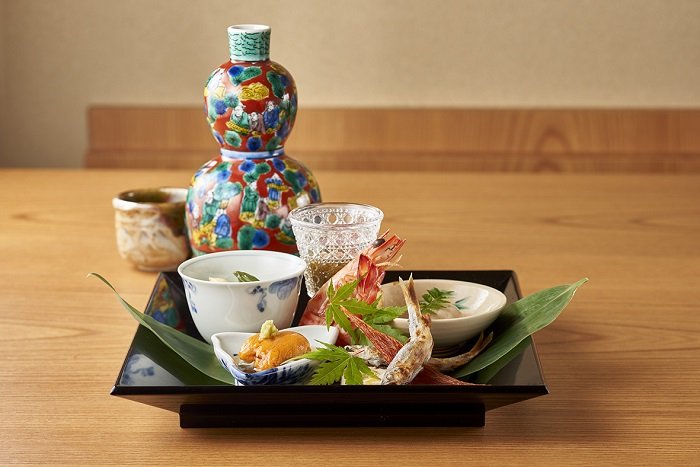
Among Kyoto's kaiseki houses, Sojiki Nakahigashi occupies a distinct position: a two-Michelin-star counter in Sakyo Ward where the menu is built around wild plants foraged daily from the surrounding hills. Tabelog Silver-rated with a 4.31 score, it holds consistent placement on Opinionated About Dining's Japan rankings and La Liste's global list. Dinner runs ¥30,000–¥39,999; lunch offers the same kitchen at ¥10,000–¥14,999.
- 2 Michelin Stars
At a glance
- Cuisine
- Michelin 2-Star Seasonal Kaiseki
- Price
- $$$$
- Per person
- $70
- Hours
- Mon: Closed; Tue: 12–2 PM, 6–9 PM; Wed: 12–2 PM, 6–9 PM; Thu: 12–2 PM, 6–9 PM; Fri: 12–2 PM, 6–9 PM; Sat: 12–2 PM, 6–9 PM; Sun: 12–2 PM, 6–9 PM
- Neighborhood
- Sakyo Ward
- Rating
- 4.5 (319)
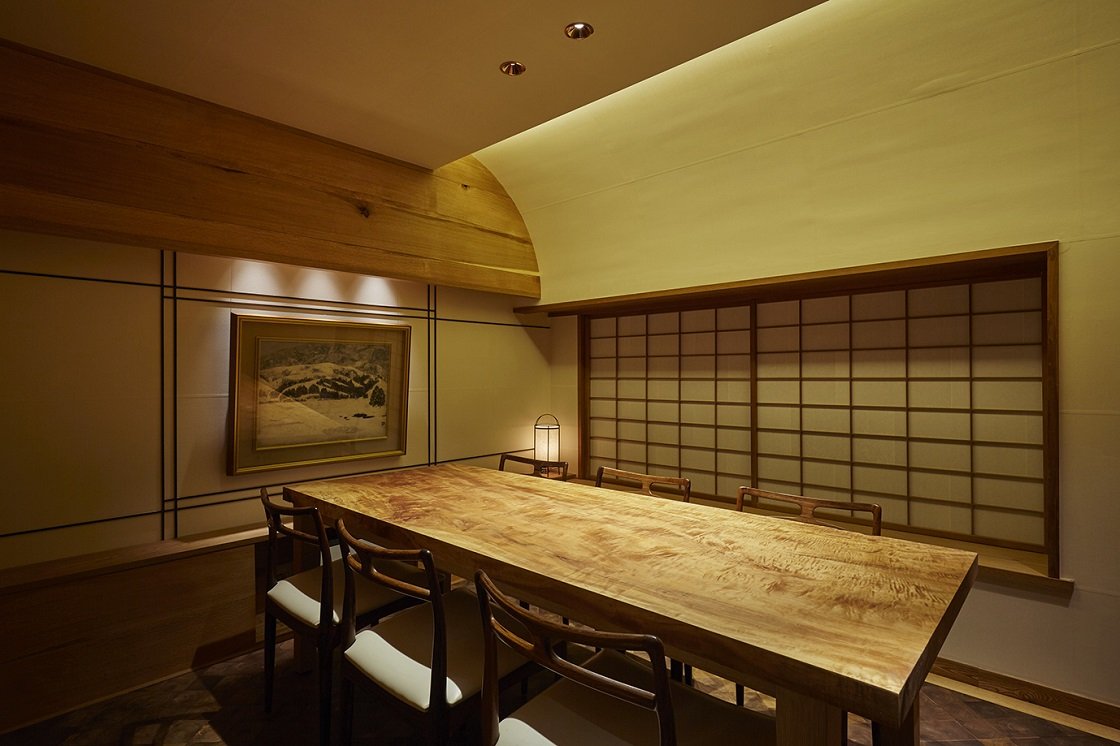
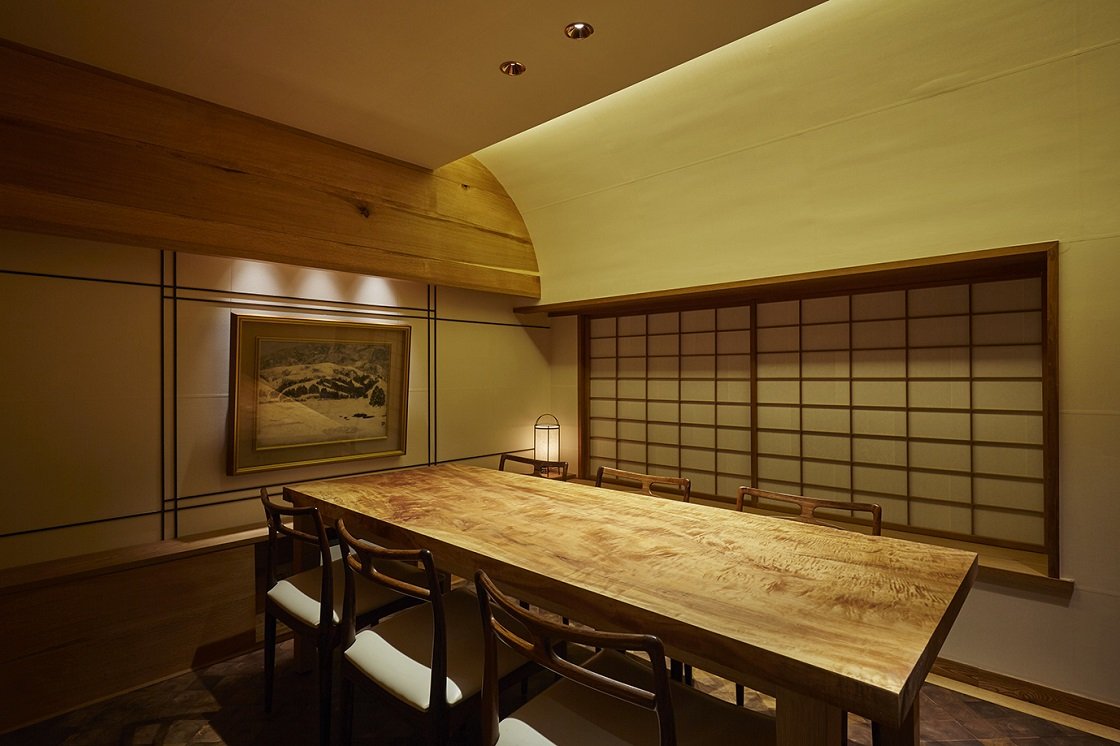
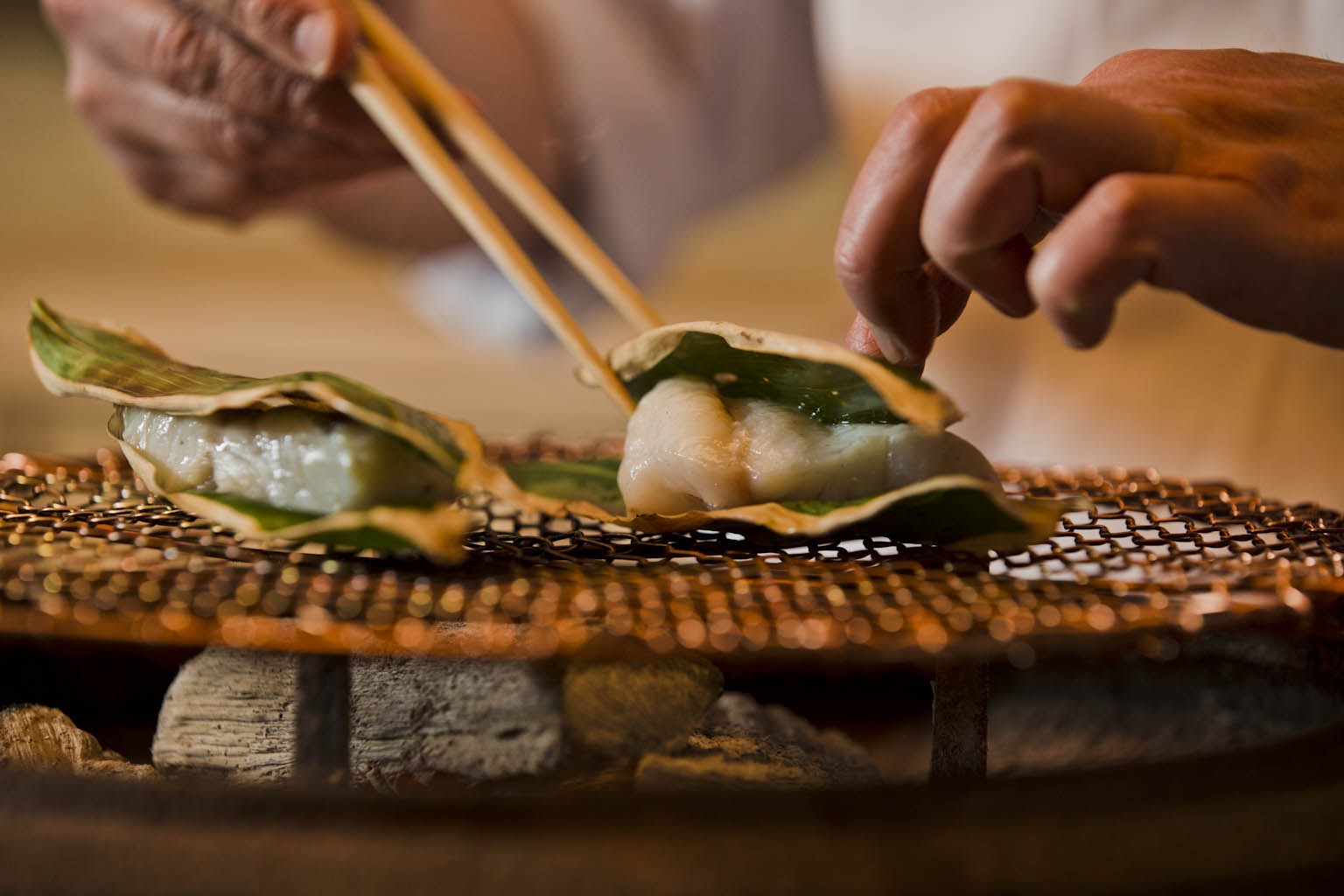
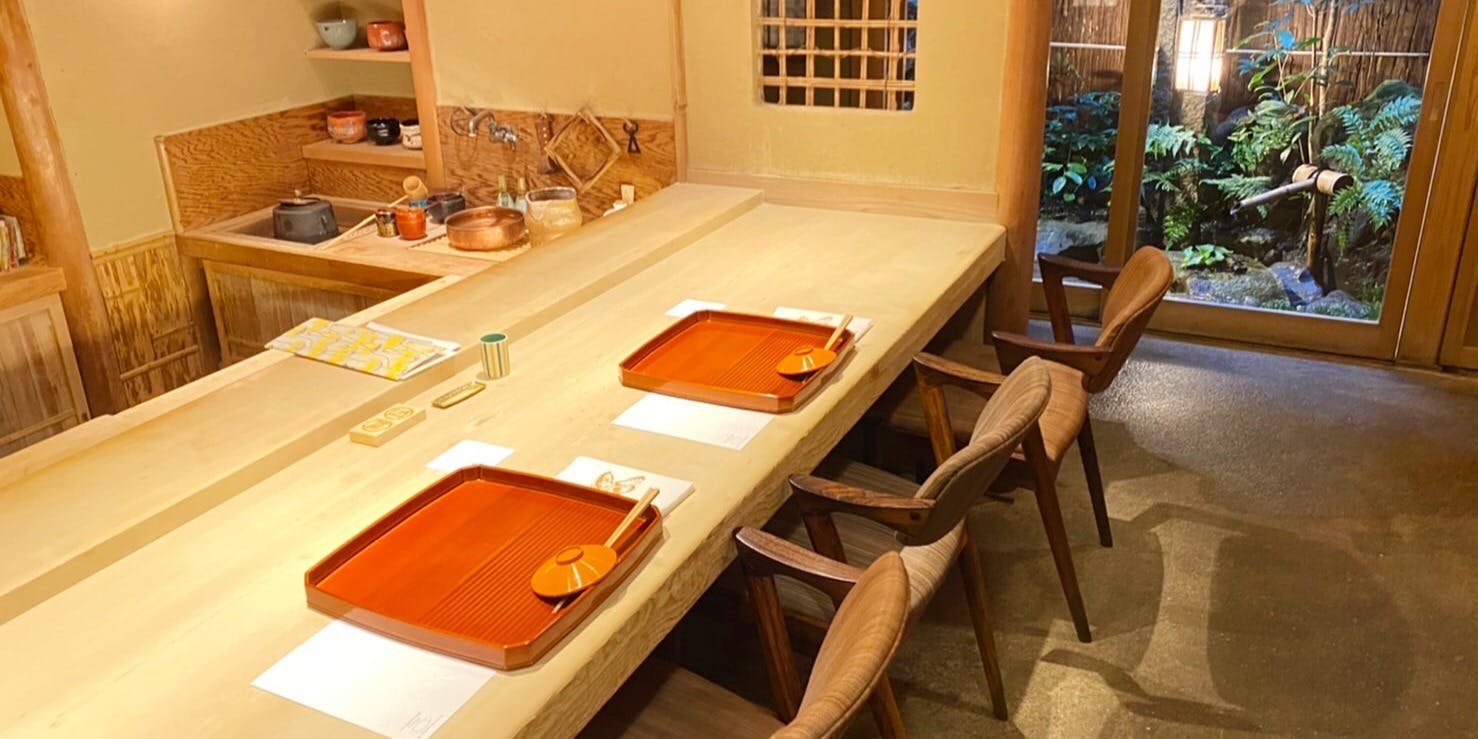
<h2>A Counter Shaped by the Mountain Behind It</h2><p>Sakyo Ward sits at Kyoto's northeastern edge, where the city's grid dissolves into the foothills of Higashiyama. The kaiseki houses concentrated here — near Nanzenji, Ginkakuji, and the Philosopher's Path — occupy a quieter tier than the dense, competitive dining corridor of Gion. In this neighbourhood, the surrounding terrain is not backdrop but ingredient source, and no restaurant makes that relationship more literal than Sojiki Nakahigashi. The address on Jodoji Ishibashicho puts it a three-minute walk from the Ginkakuji-michi bus stop, close enough to the mountain trails that the distance between foraging and plating is measured in minutes, not supply chains.</p><p>What draws repeat visitors to this 30-seat house restaurant is the specific logic of its menu: every course is grounded in what chef Hisao Nakahigashi has gathered that morning. Wild vegetables, flowers, herbs, and grasses foraged from the hills above Kyoto form the structural core of the kaiseki sequence. This is not garnish-level foraging , the plant material is the point. The wooden tablet at the entrance frames it plainly: rice cooked in an okudo (traditional wood-burning hearth) stove, accompanied by char-grilled snacks and wild grasses and flowers. That credo has held across more than a decade of consistent recognition, from Tabelog Gold in 2020 through successive Silver years and Tabelog 100 selections in 2021, 2023, and 2025.</p><h2>What the Regulars Know</h2><p>Among Japan's kaiseki restaurants, there is a dividing line between those that source with precision and those that are structurally built around a single forager's daily output. Sojiki Nakahigashi belongs to the latter category, and that distinction matters to guests who return season after season. The menu is not fixed, because the mountain dictates otherwise. A guest who has visited three times in different seasons has, in effect, eaten three entirely different menus , the same counter, the same rice cooked in the same hearth, but the plant material shifting with each month's offerings from Nakahigashi's own vegetable garden and the surrounding hills.</p><p>That kind of repetition-with-variation is what sustains a regular clientele at this price tier. Dinner at ¥30,000–¥39,999 positions Sojiki Nakahigashi below the ¥¥¥¥ tier occupied by [Gion Sasaki](https://www.enprimeurclub.com/restaurants/gion-sasaki-kyoto-restaurant) and [Kikunoi Honten](https://www.enprimeurclub.com/restaurants/kikunoi-honten-kyoto-restaurant), and at a meaningful distance from Kyoto's most formal kaiseki houses. The lunch service, priced at ¥10,000–¥14,999, is where many first-time visitors enter , and where the same kitchen operates with the same foraged material at roughly a third of the dinner cost. That pricing asymmetry makes the midday counter one of the more efficient ways to access two-Michelin-star kaiseki in Kyoto.</p><p>The physical layout reinforces the intimacy. Twelve counter seats face the kitchen; two tatami rooms on the second floor accommodate private groups of two, four, or six. Private room access is available for the full party, making the restaurant workable for small celebratory groups who want the kaiseki format without a shared counter. The non-smoking policy and smart casual dress code signal where it sits socially , not the austere formality of Kyoto's most traditional rooms, but attentive and considered.</p><h2>Position in Kyoto's Kaiseki Field</h2><p>Kyoto's kaiseki scene has several distinct registers. At the leading end, three-Michelin-star establishments like [Hyotei](https://www.enprimeurclub.com/restaurants/hyotei-kyoto-restaurant) represent centuries of institutional continuity and price accordingly. Below that, a productive middle tier of two-star kaiseki houses operates with strong critical credentials and more approachable booking windows. Sojiki Nakahigashi sits firmly in that second group, carrying two Michelin stars since at least 2024, a Tabelog score of 4.30–4.31 across recent years, and placement in La Liste's global rankings at 88 points in 2025 and 87 in 2026.</p><p>On Opinionated About Dining's Japan rankings , which weight peer reviews from food professionals , Sojiki Nakahigashi has moved between #111 (2023), #131 (2024), and #161 (2025), a trajectory that reflects the ranking system's competitive pressure rather than any decline in the kitchen. The 2025 Tabelog Silver award and continued Tabelog 100 selection in the Japanese cuisine WEST category confirm sustained standing. Across Kyoto's kaiseki peer group, which includes [Mizai](https://www.enprimeurclub.com/restaurants/mizai-kyoto-restaurant) and [Gion Maruyama](https://www.enprimeurclub.com/restaurants/gion-maruyama-kyoto-restaurant), the foraging-centred approach at Sojiki Nakahigashi marks it as categorically different from technique-led or lineage-heavy kaiseki houses.</p><p>For guests planning a wider Japan itinerary, the same plant-forward rigor appears in different regional contexts at venues like [HAJIME in Osaka](https://www.enprimeurclub.com/restaurants/hajime-osaka-restaurant) and [akordu in Nara](https://www.enprimeurclub.com/restaurants/akordu-nara-restaurant), while Tokyo kaiseki counters including [RyuGin](https://www.enprimeurclub.com/restaurants/ryugin) and [Kanda](https://www.enprimeurclub.com/restaurants/kanda-tokyo-restaurant) offer useful comparison points for the formal kaiseki format in a different city register. Guests making kaiseki central to a Japan trip might also reference [Harutaka in Tokyo](https://www.enprimeurclub.com/restaurants/harutaka-tokyo-restaurant), [Goh in Fukuoka](https://www.enprimeurclub.com/restaurants/goh-fukuoka-restaurant), [1000 in Yokohama](https://www.enprimeurclub.com/restaurants/1000-yokohama-restaurant), and [6 in Okinawa](https://www.enprimeurclub.com/restaurants/6-okinawa-restaurant) for regional variation across the form.</p><h2>The Kusaki Principle</h2><p>The word <em>kusaki</em> , grasses and trees , appears in the restaurant's own framing of what it does. In kaiseki terms, this signals an orientation toward plant material that pushes against the protein-anchored structure of more conventional seasonal menus. Where a traditional kaiseki sequence might treat vegetables as counterpoint to fish or meat courses, here the hierarchy inverts: the wild grasses, flowers, and seeds gathered that morning establish the menu's logic, and the other elements arrange themselves accordingly. Nakahigashi's own vegetable garden supplements the foraged material, meaning the kitchen operates with ingredients that no wholesale market can replicate or substitute.</p><p>That structural commitment explains the consistent critical recognition. Michelin's two-star designation, sustained across 2024 and 2025, reflects cooking that is recognisably excellent by the guide's criteria , precision, personality, and a coherent point of view , while stopping short of the third star that would signal something approaching perfection by those same criteria. The gap is instructive: this is not a restaurant calibrated for maximal formal impressiveness, but one whose distinctiveness depends on ingredients that are, by definition, seasonal, variable, and beyond the chef's complete control.</p><h2>Planning Your Visit</h2><p>Getting to Sojiki Nakahigashi requires some intention. There is no parking on site, and the address in Jodoji places it in a residential neighbourhood more naturally reached by public transport or taxi. The Ginkakuji-michi bus stop on Kyoto City Bus routes is a three-minute walk; Demachiyanagi Station on the Keihan Kamo-To Line is approximately eight minutes by car. From JR Kyoto Station, allow 20 minutes by car or 30 by bus.</p><p><strong>Reservations:</strong> Bookings open from 8:00 AM on the first day of the preceding month , a strict window that favours guests who plan at least four to six weeks in advance and are prepared to act the moment reservations open. The last Tuesday of each month is closed in addition to all Mondays (and public holidays), so verify the calendar before booking. <strong>Hours:</strong> Tuesday through Sunday, 12:00–14:00 for lunch and 18:00–21:00 for dinner. <strong>Budget:</strong> Lunch ¥10,000–¥14,999; dinner ¥30,000–¥39,999. <strong>Dress:</strong> Smart casual; flip-flops, beachwear, and gym clothes are specifically discouraged. <strong>Payment:</strong> Credit cards accepted (Visa, Mastercard, JCB, Amex, Diners); IC transit cards (Suica etc.) accepted; QR code payments not accepted. <strong>Private rooms:</strong> Available for parties of two, four, or six; full private hire is possible. <strong>Seating:</strong> 30 total (12 counter, 2 tatami rooms upstairs). Children in upper primary school grades and above are welcome. The space is wheelchair accessible.</p><p>For broader planning in Kyoto, see our [full Kyoto restaurants guide](https://www.enprimeurclub.com/restaurants/kyoto), [Kyoto hotels guide](https://www.enprimeurclub.com/hotels/kyoto), [Kyoto bars guide](https://www.enprimeurclub.com/bars/kyoto), [Kyoto wineries guide](https://www.enprimeurclub.com/wineries/kyoto), and [Kyoto experiences guide](https://www.enprimeurclub.com/experiences/kyoto).</p><h2>FAQ</h2><h3>What should I eat at Sojiki Nakahigashi?</h3><p>There is no à la carte option and no fixed printed menu , what arrives at the counter reflects what Hisao Nakahigashi gathered from the mountain and his garden that day. The <em>kusaki</em> format means wild plants, flowers, and herbs anchor the sequence, with rice cooked in the okudo hearth as a constant. First-time visitors are advised to go without specific dish expectations: the point is to eat what the season and the surrounding terrain have made available that week, prepared by a kitchen that has held two Michelin stars and consistent Tabelog recognition since at least 2017. If the lunch pricing (¥10,000–¥14,999) suits your budget, the midday service delivers the same kitchen and the same sourcing logic at a substantially lower entry point than dinner.</p>
Know before you go
- Dress code
- smart_casual
- Reservations
- essential
- Payment
- cash
Frequently asked
Who runs the kitchen at Sojiki Nakahigashi?
The chef associated with Sojiki Nakahigashi is Hisao Nakahigashi.
What's Sojiki Nakahigashi known for in terms of accolades?
Sojiki Nakahigashi has received recognition including: {"Year":"2026","Award Source":"Tabelog","Award Type":"The Tabelog Award","Award Group":"bronze","Award Group Rank":"418","Restaurant Name":"Soujiki Nakahigashi","Score":"4.30","Budget":"Dinner: JPY 30,000 - JPY 39,999; Lunch: JPY 10,000 - J….
What should I eat at Sojiki Nakahigashi?
There is no à la carte menu. The counter serves a set kaiseki course built around what chef Hisao Nakahigashi has foraged from the mountain and harvested from his own vegetable garden that day. The restaurant's own framing centres on kusaki — grasses and trees — meaning plant matter drives the structure of the meal from flowers and leaves through to seeds. Dinner runs ¥30,000–¥39,999 per person; lunch is ¥10,000–¥14,999.
How would you describe the cuisine at Sojiki Nakahigashi?
Sojiki Nakahigashi is categorized in our database as Kaiseki, Japanese.
What's the price range at Sojiki Nakahigashi?
Pricing at Sojiki Nakahigashi is listed as ¥¥¥.
Address
32-3 Jodoji Ishibashicho, Sakyo Ward, Kyoto, 606-8406, Japan
Sakyo Ward
How it compares
- Price
- ¥¥¥
- Notes
- This venue
- Price
- ¥¥¥¥
- Notes
- Kaiseki, Japanese, ¥¥¥¥
- Price
- ¥¥¥
- Notes
- Italian, ¥¥¥
- Price
- ¥¥¥¥
- Notes
- Kaiseki, ¥¥¥¥
- Price
- ¥¥¥¥
- Notes
- Japanese, ¥¥¥¥
- Price
- ¥¥¥
- Notes
- Chinese, ¥¥¥